

NEWS
Karibu (Welcome) :: Back to School in Midst of War
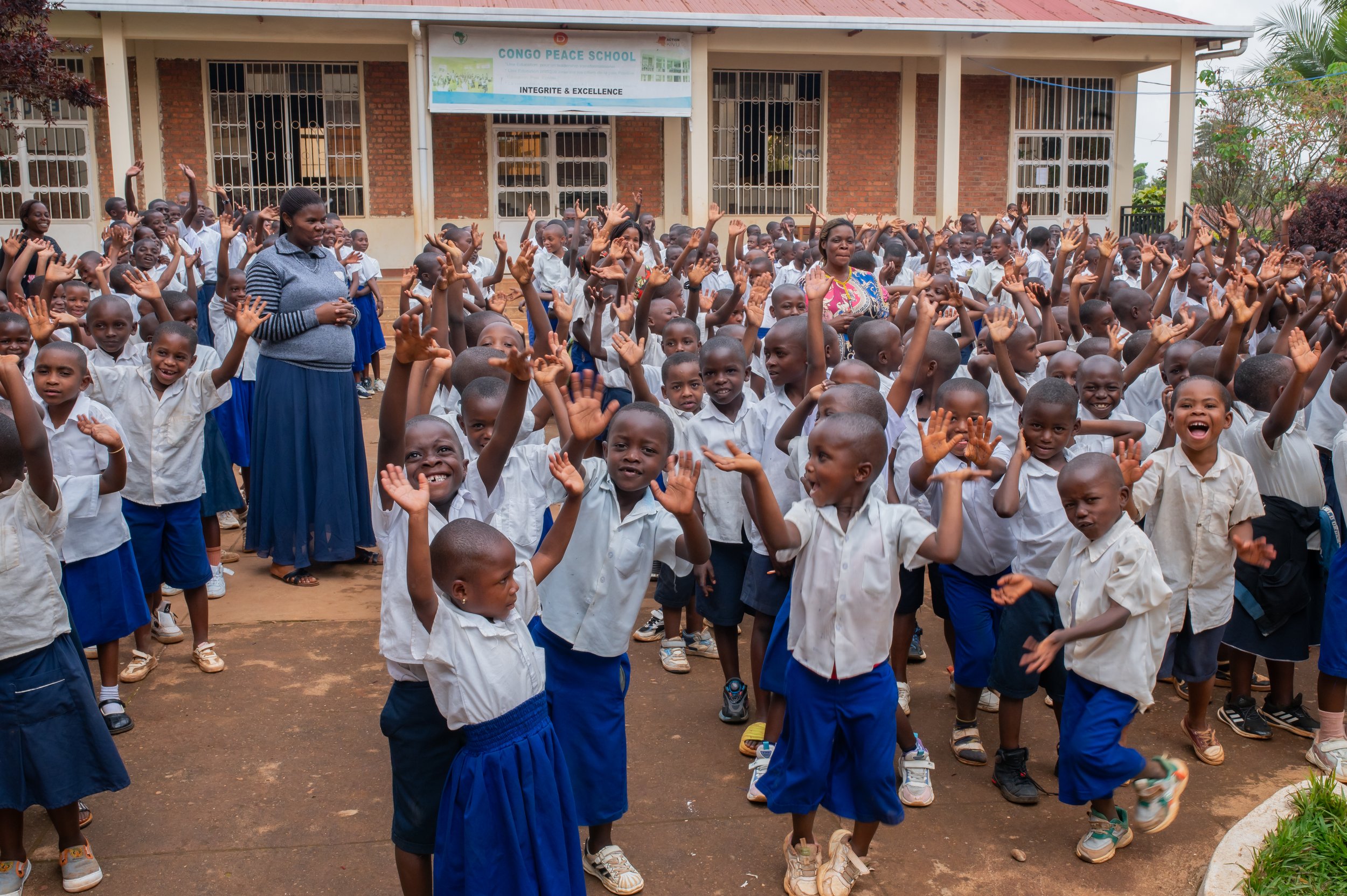
Karibu (“welcome,” in Swahili) to year nine of the Peace School. On September 1st the Congo Peace School not only welcomed back the returning students who grew up in the surrounding villages, but the campus is now a beacon of peace and education for 195 additional students who are known as IDPs, internally displaced peoples.
I dislike acronyms for people groups, it reduces them to a category and a statistic instead of a child who had a home that they loved, a place where they knew their neighbors. Roads that they grew up walking, knowing just where one could tuck into a hiding place in a field and escape your older siblings for a moment of peace.
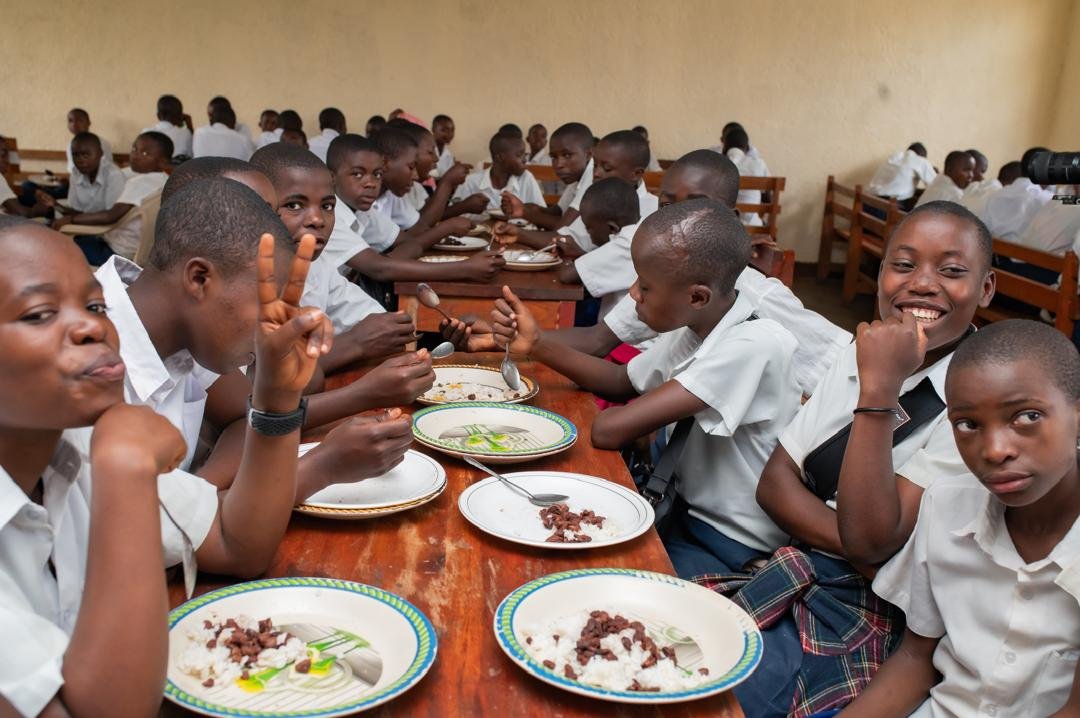
Suddenly, because of war between other groups named with acronyms, your mother has grabbed your hand and is running with you and your siblings, fleeing for your lives. You end up in Mumosho, a place people have described as relatively peaceful. There’s a school there with a library of books, a playground, a soccer field, a basketball court, a computer lab, and a cafeteria where all the students eat two meals a day. You meet teachers who do not punish you for asking questions, but encourage your curiosity, and explore what elements of trauma might be behind your actions.
When so many parents fled their homes towards the end of the past school year, our Founding Director Amani Matabaro could not help but welcome them in. This has expanded the school’s capacity for joy and connection, offering opportunities in understanding other cultures and tribes and sharing in one another’s stories of lives lived in different parts of Congo.
It has also increased some of the costs to keep these students safe, fed, and in the classroom to continue their education.
Help Us Close the $200,000 Gap
Welcoming 195 students displaced by conflict has increased enrollment at the Congo Peace School to 755 students, creating an unexpected $200,000 funding gap for this school year. Your support now will help ensure every student can continue to learn in safety, eat two meals each school day, and have access to the teachers, supplies, uniforms, counseling, health support, sports, and other resources the school provides.
We are also working to make it easier for you to engage and give. Action Kivu is optimizing our giving platforms and expanding the ways you can support the Congo Peace School and all of our programming. In addition to one-time and monthly gifts through our updated donation platform, you can now recommend a grant from your donor-advised fund directly through the Action Kivu website.
We need your help to close this gap. Please consider making a gift today, increasing or starting a monthly gift, or sharing this appeal widely with your friends, family, and networks. (If your monthly gift is currently through PayPal, please follow these directions to cancel that, and visit actionkivu.org/donate to switch to our new Donorbox system that uses Stripe.)
And if you have an idea, a connection, or another way you would like to get involved, we want to hear from you! Please email rebecca@actionkivu.org. There are many ways to engage with Action Kivu and help us expand the community behind this work.
Give, share, or get involved today at actionkivu.org/donate
What Sets the Peace School Apart?
In their DRC News Monitor, PAEMA reported that, “When schools are open, families who were displaced by conflict and now live in refugee camps don’t have the money they need to pay for the school fees and uniforms required for their children to resume their schooling.
“The Ebola epidemic is another major barrier: the spokesperson for the teacher’s union in Ituri said that on September 1st, only one out of ten students came to school, due to fears of Ebola transmission. Most schools are not equipped with washing and sanitation equipment, including soap, and some don’t even have water. In the North Kivu provincial capital of Beni, the few students who made it to school were sent back home as their teachers did not come.”
Thanks to your partnership with the Congo Peace School and its surrounding community, the students and staff there not only have access to soap and water, they have education about how to prevent the spread of Ebola. Their temperatures are taken before entering the campus, and they know to report any symptoms. Thanks to your investment, the parents or families of orphaned children do not have to pay school fees. The entire student body is made up of those kids most in need, for whom many would not eat if they did not attend the Congo Peace School.
These students, and especially those who were forced from their homes and local schools, now feel a sense of belonging. (Note – there are no new cases of Ebola in the school’s region of South Kivu, but everyone in the community continues to practice caution and take steps to stop any spread.)
Amani spoke to both the elementary/preschool and secondary school principals, who shared the following about the first week back to school:
“The reopening was marked by joy, happiness and resilience. Teachers and students gathered with renewed energy despite the difficult context of war in eastern DRC. We emphasized education for peace, reminding students and staff that the Congo Peace School learning approach is not only about school success but also about building social cohesion and harmony in the community and the role each and everyone has to play.
“We referred to the remarkable success rate of 100% in the state exams for the class of 2026 to motivate students and engage them in working hard. Students entered the new term with confidence and pride. This success became a source of encouragement for younger classes.”
Amani spoke at length with the school principals about the importance of teacher commitment in a thriving school community. Despite challenges, during the first week back in school, the teachers showed strong dedication, welcoming students warmly and reinforcing the values of perseverance and unity.
To share all of this good community school spirit, the school is inviting community members, parents, and local leaders in a general assembly later this month to ask them to continue to support the school in whatever way they can (some community members come monthly to clean and care for the grounds), to continue looking at the Peace School as a beacon of hope in a region facing instability.
Everyone was reminded that the collective spirit of peace and determination will help everyone begin the year with courage. It was a week of joyful renewal, setting the tone for a school year where peace education and school excellence must walk hand in hand. Meals were shared joyfully.
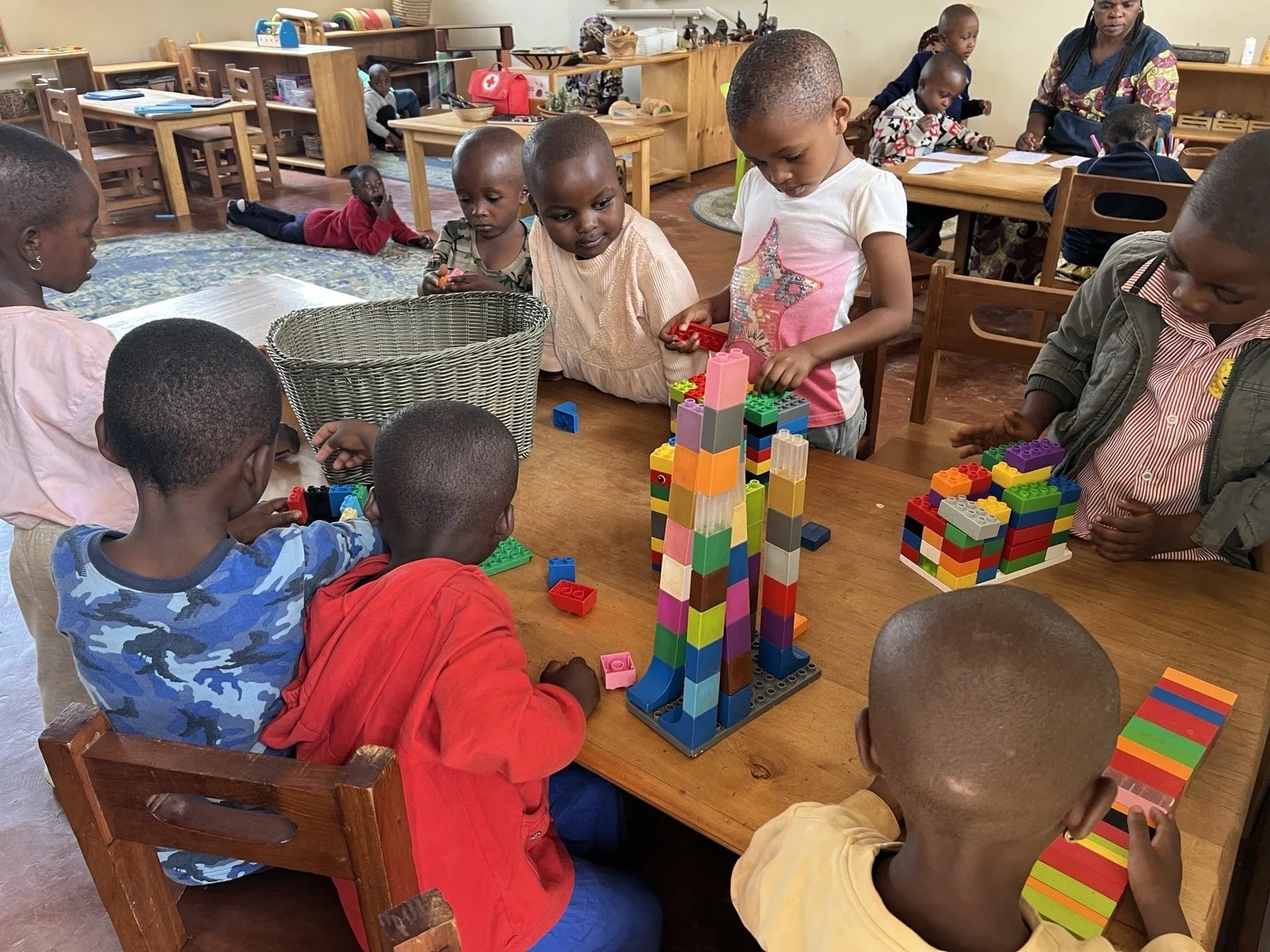
Here are some of those students today, several weeks into the school year. Our partner Nest Global supports the Nest Congo, the three classroom preschool program.
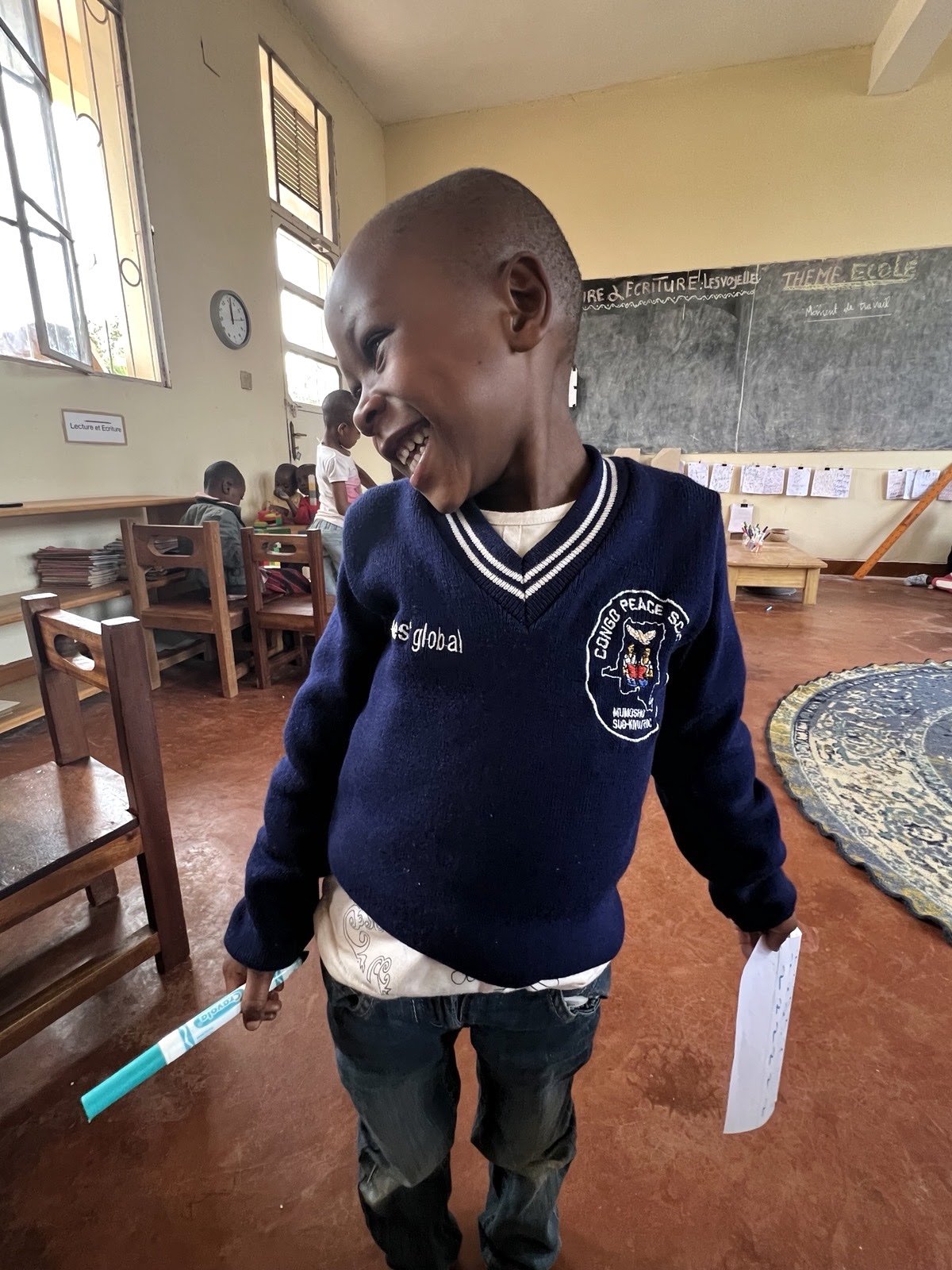
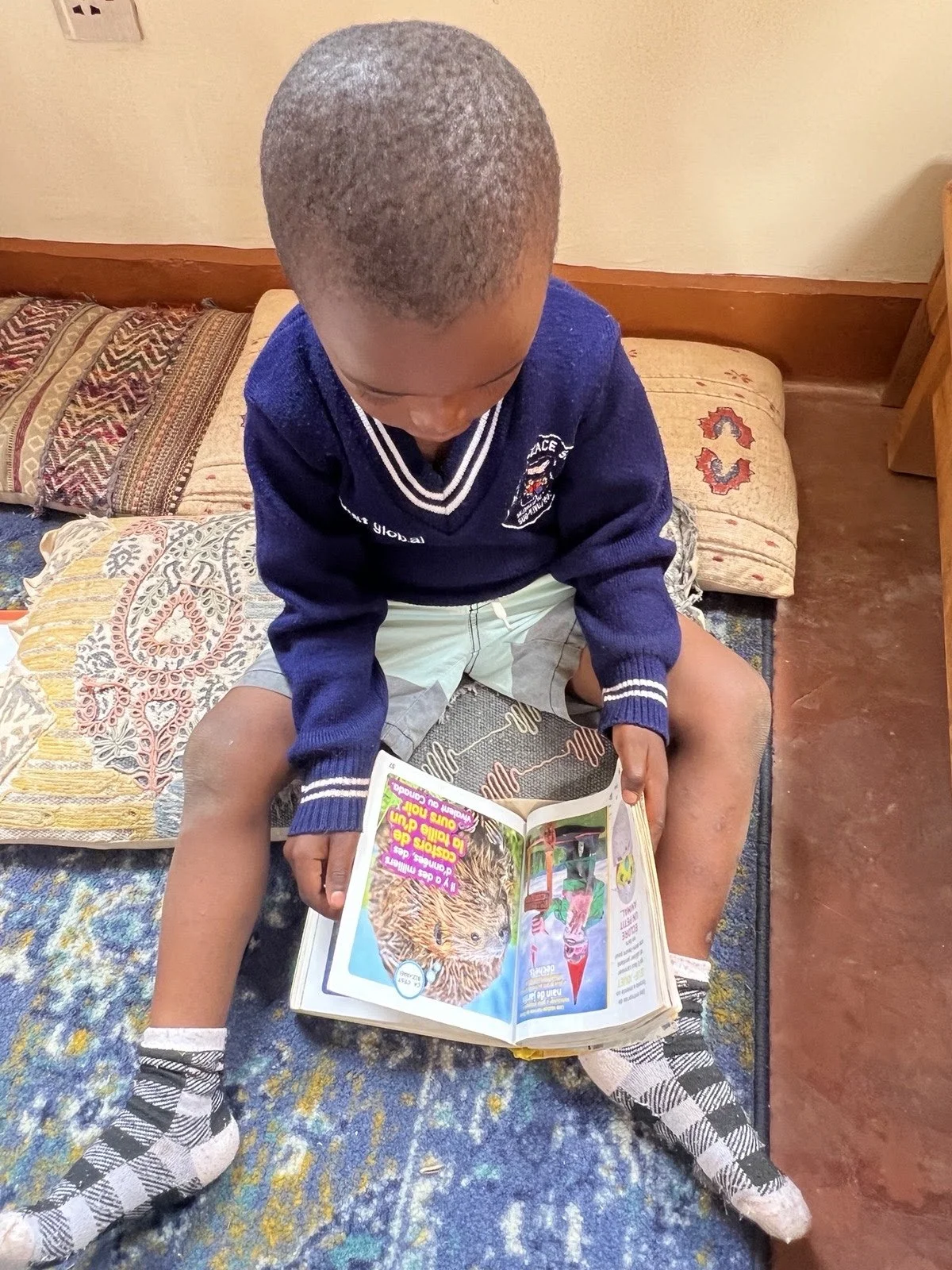
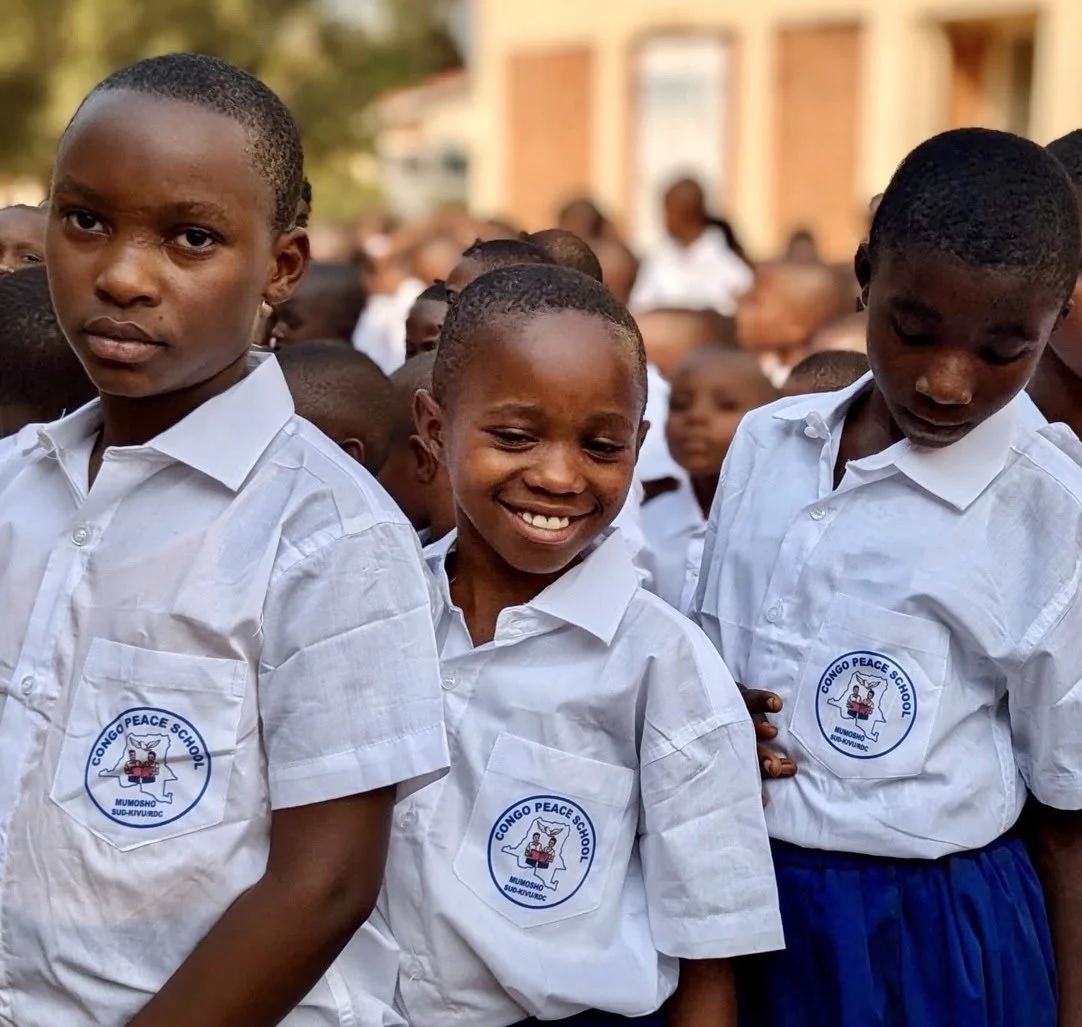
New this year: School uniforms with the Congo Peace School’s local logo. The local leadership realized that the identification with the school will help keep the students and staff safe on the roads to and from school. Despite the fact that the warring factions are not fighting for peace, the fighters appear to respect the nonviolent mission of the school, and the logo on the uniforms removes any suspicion that a student might be part of an enemy militia or army.
Thank you for turning your attention, time, and giving to the people of Congo. Your support is making a long-term, lasting investment in peace through students, staff, and community members who are learning how to resolve conflicts with nonviolent language and actions – imagine that world with us. Please consider a one-time or monthly donation to help us continue to create it.
Congo Peace School Update: Class of 2026, Ebola Prevention, Student Reflections, + a Campus Tour (Video)
100% SUCCESS
(It’s so rare that we get to begin an update with those words these days!) The results from the DRC national exams are in, and the Congo Peace School high school seniors all passed. Not only is this rare in the region – these students succeeded in the midst of war and the threat of Ebola.
This photo shows how the school staff led the seniors in expressive meditation before the exams. Trained by folks at Center for Mind Body Medicine, the staff teaches the students to release their stress and nervous thinking through active techniques such as shaking the body, dancing, vocalizing and writing to help emotions flow outward, safely.
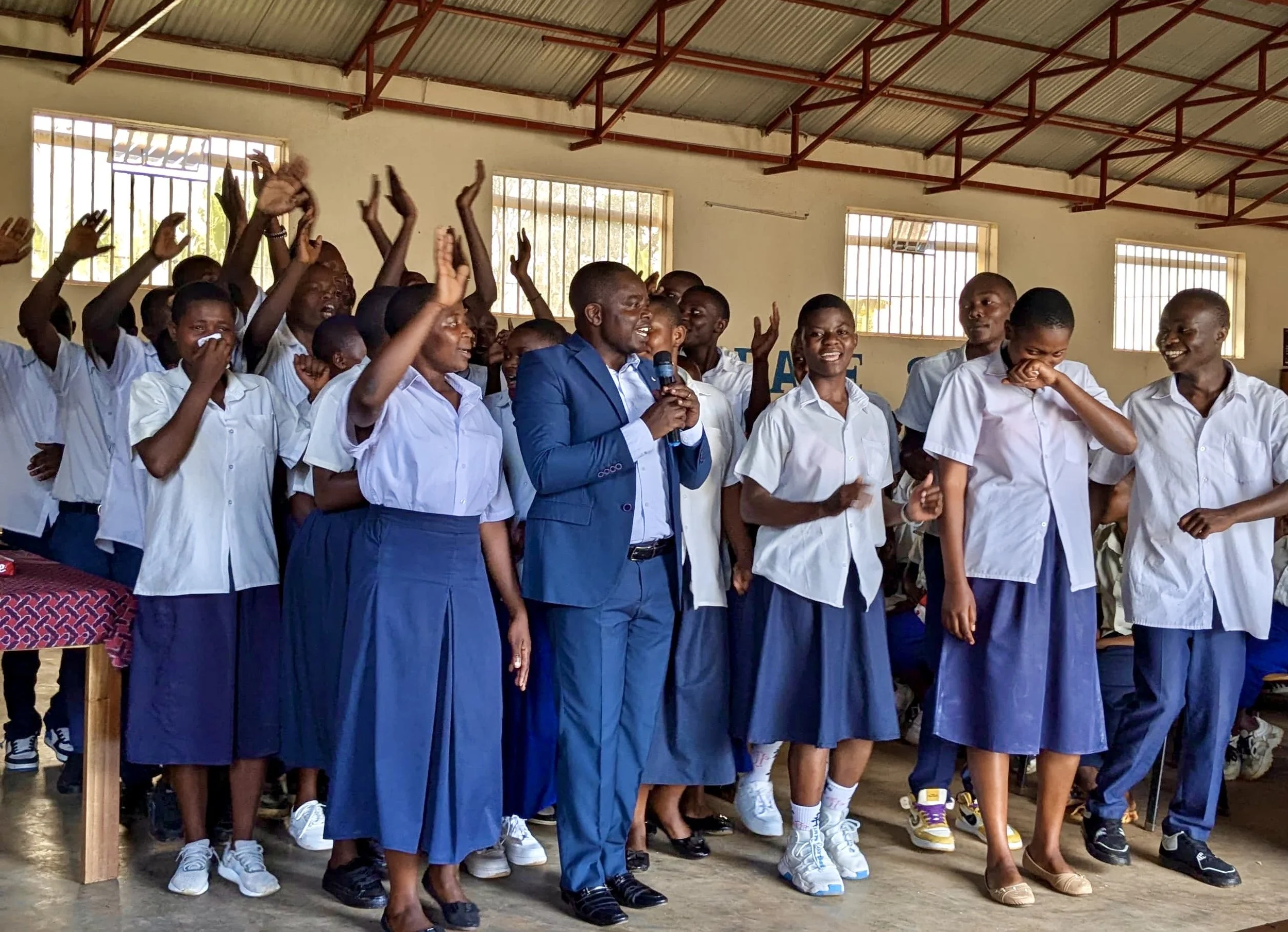
We celebrate this achievement with the whole Congo Peace School community and with YOU - our partners in educating the next generation of peace builders! After the Ebola update, read updates from some of the students in their own words.
EBOLA PREVENTION & EDUCATION UPDATE
Thanks to many of you donating to meet the need and an emergency grant from our Peace School preschool partner NEST Global, the school was able to procure prevention and protection equipment (PPE) shortly after the reports of the Ebola outbreak in eastern Congo. Before entering the campus, everyone has their temperature taken and wash their hands at the stations with chlorinated water.
Upon receiving the PPE supplies, the Peace School nurses have been disseminating key information on the Ebola virus, not only to those at the school, but to the surrounding communities through flyers and meetings. They teach how to prevent contracting and spreading the disease through regular hand washing and avoiding hunting animals / eating the meat. They educate about the mode of transmission, symptoms, and what to do immediately when symptoms are reported. While larger organizations are focusing on the epicenter, prevention remains a must in areas not seriously affected yet.

Why invest in prevention activities in school settings? Our Founding Director Amani Matabaro shares that schools are daily points of contact with larger populations, children, youth and families. Schools serve as awareness-raising locations to disseminate vital prevention messages. We are using the Congo Peace School to contribute to the fight against misinformation and to strengthen community trust.
The PPE at the school includes gloves, masks, gowns, face shields, hand sanitizer, soap, large containers of chlorinated water, disinfecting wipes, sprayers for cleaning classrooms and restrooms, bins for dispensary waste, flash thermometers for temperature checks, and printed communication materials that were distributed among school children and community members.
Messages were tailored for students, teachers, and parents to promote hygiene and vigilance. The Peace School is collaborating with the local health Center of Mumosho which is under supervision of the Health Zone. After meeting with the head nurse there and other stakeholders, we are meeting a pressing need to establish a new water source to supply the community of Mumosho. We continue to supply chlorinated water and education to the community, as no new cases have been found in South Kivu - the current effort is towards prevention of spread through education, clean water, and these practices.
Thoughts on Resilience
Speaking to Amani on a call the other day, one of the members of the Dillon Henry Foundation, our Peace School Founding Partner, hearing of how at peace the students and staff feel while at the school, noted how the school could be called the Congo Resilience School.
We watch from a distance as the students, staff, and the surrounding community move through and survive such horrors as the war, mass killings, and rape used as a weapon of war. We know how their nervous systems on high alert, in constant vigilance against violent attacks as well as trying to survive the economic fallout of the war and fear over how to procure their next meal for them, or for a child.
Amani shared that the word suicide used to sound foreign to the locals in eastern Congo, a western term that they didn’t understand. Horrifyingly, over the last few months with the war exacerbating the already extreme poverty, suicide is on the rise. At one period three deaths by suicide were reported per day for one month in South Kivu. One can only imagine the desperation of a parent unable to feed their children.
It is in that world that your partnership with the Congo Peace School provides the ground for people to find they are resilient, that they have the means to care for each other. The students eat two meals a day, often the only food they will get. The students and staff enter the school campus, Amani says, and they feel at peace. They can play – on the playground, on the soccer field, on the basketball court. They can find a quiet part of the library and disappear into a book. They can go to the computer lab and write an email to a pen pal in Brooklyn.
It is not hyperbole to say that your financial partnership is saving lives, and providing a place of peace so that people can not only survive, they can thrive and plan for a better future. Your emotional partnership – turning your attention to Congo, telling others about the what is happening there, ringing the alarm that the war and violence is unacceptable, reminding others that we are all connected, and thus if one or many are suffering, we are all suffering – is changing lives.
STUDENT STORIES
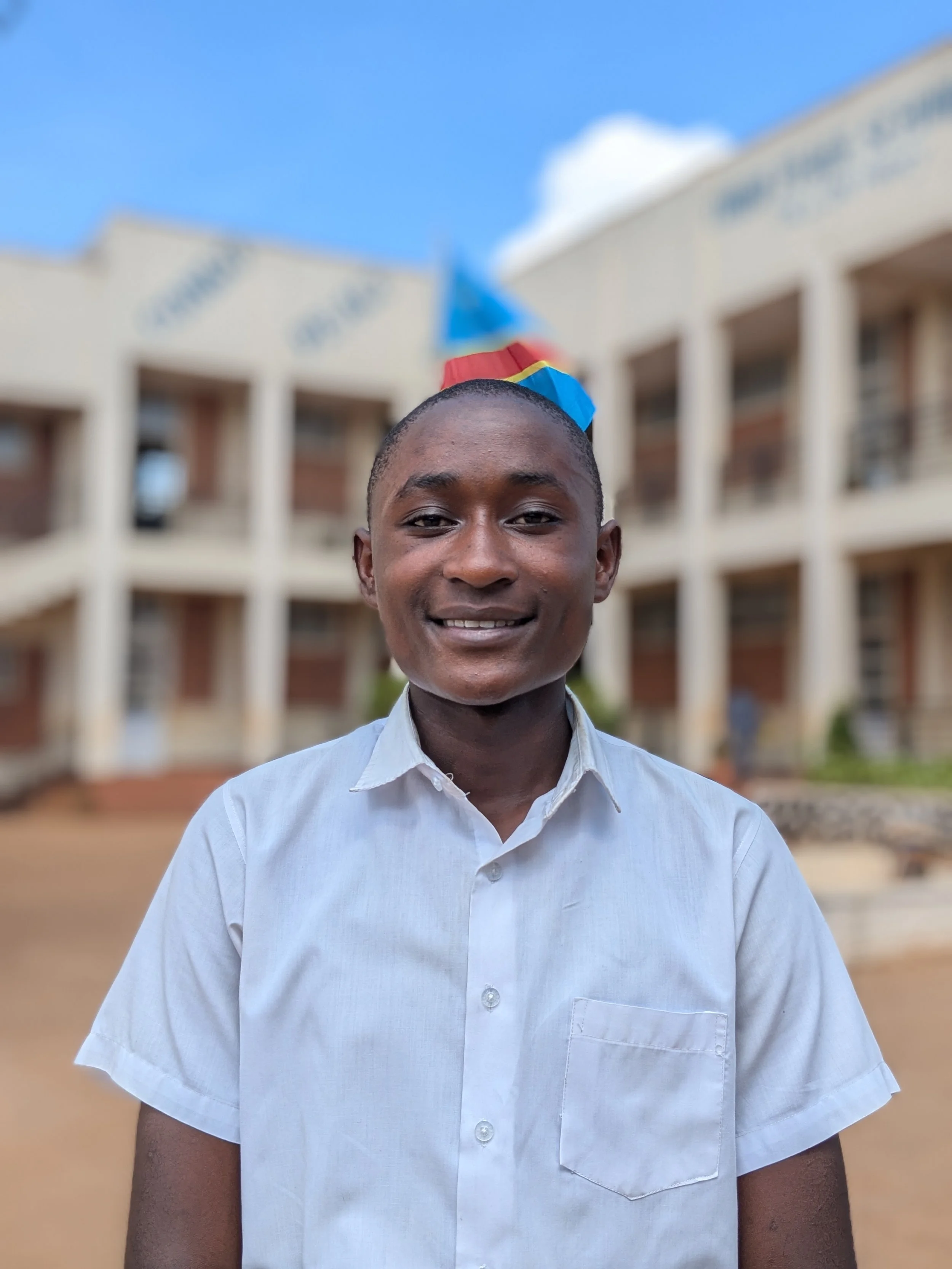
MATENDO CIZA STEPHANO
Interviewed before the national exams, now a Congo Peace School graduate, Class of 2026!
“I am a senior in the 6th grade of the humanities program at the Congo Peace School. The highlights of my school year were the classroom lessons, computer lab sessions, and ongoing assessments, as they prepared us for the upcoming first- and second-semester exams. In addition to that, other memories that left a strong impression on me were from the computer lab, since computer skills are becoming essential in today’s workforce.
Over the course of this school year, what has changed in me as a senior is that I’ve started studying in groups and even on my own without being forced to catch up in the subject, to ensure success on the state exams. My way of thinking and feeling about certain things has also changed, because I already know how to behave in social situations; once I’m in college and in the workplace, I won’t have many problems.
The lesson on nonviolence and peace that left the deepest impression on me this school year is “Dialogue,” because it allows two or more people to engage in verbal exchange to peacefully resolve various problems. It remains important to me because dialogue with others helps us identify the problem and seek solutions together; it allows students to come together and discuss any topic to find a peaceful and lasting solution.”
*We previously featured Matendo in 2023 on smiling as an act of nonviolence. It’s so wonderful to watch how these students are growing up in the security of the Congo Peace School’s campus, learning how to heal from trauma and share those practices and experience with their friends, families, and eventually new communities. The ripple effect of educating peace builders will be felt and seen in Congo.
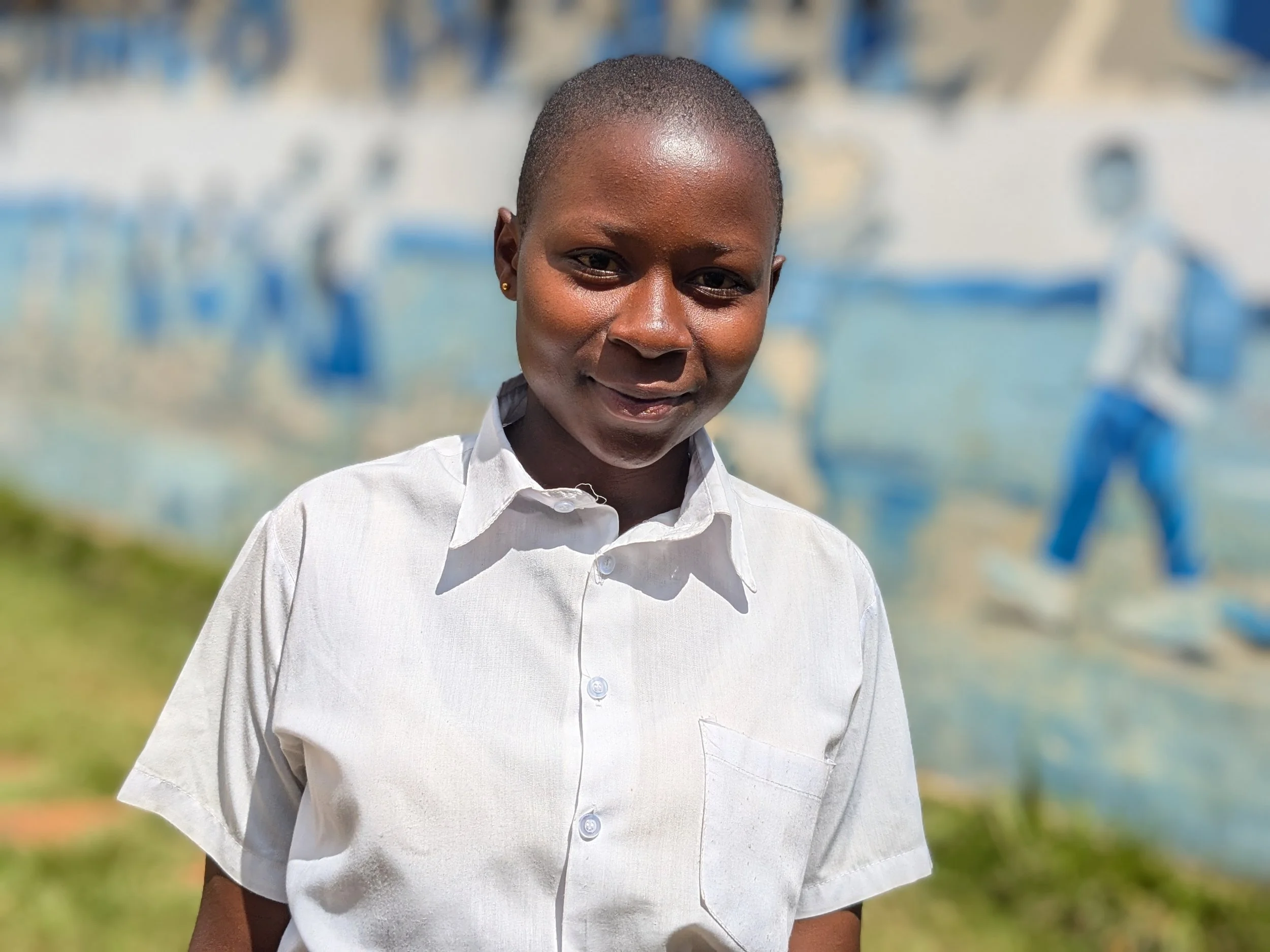
IRAGI MWAKA ALICE, 19
Now a Congo Peace School graduate, Class of 2026!
The highlights [from the year] for me are mainly during computer science classes, community development sessions, lab work, and when we resolve problems or conflicts between students at school.
What has changed is my approach to studying; I now attend school regularly, and I can resolve certain problems because I have confidence in myself. Before, I used to say I would go to a convent, but given the realities of life, I’ve decided to go to college if I can afford it.
What excited me was being able to wear regular clothes—no longer forced to wear the blue-and-white uniform—and also that I’ll be called a student rather than a pupil. I’ll now use carbon copy paper for my notes instead of notebooks, and I’ll be in charge of managing my own time.
The lesson that made the biggest impression on me was “gratitude.” It was the most important because it speaks to acknowledging the good received. Many students aren’t grateful; they’re characterized by ingratitude. Even if we do something good for them, it’s very difficult for them to say thank you or acknowledge the sacrifice made by the person who helped them.”
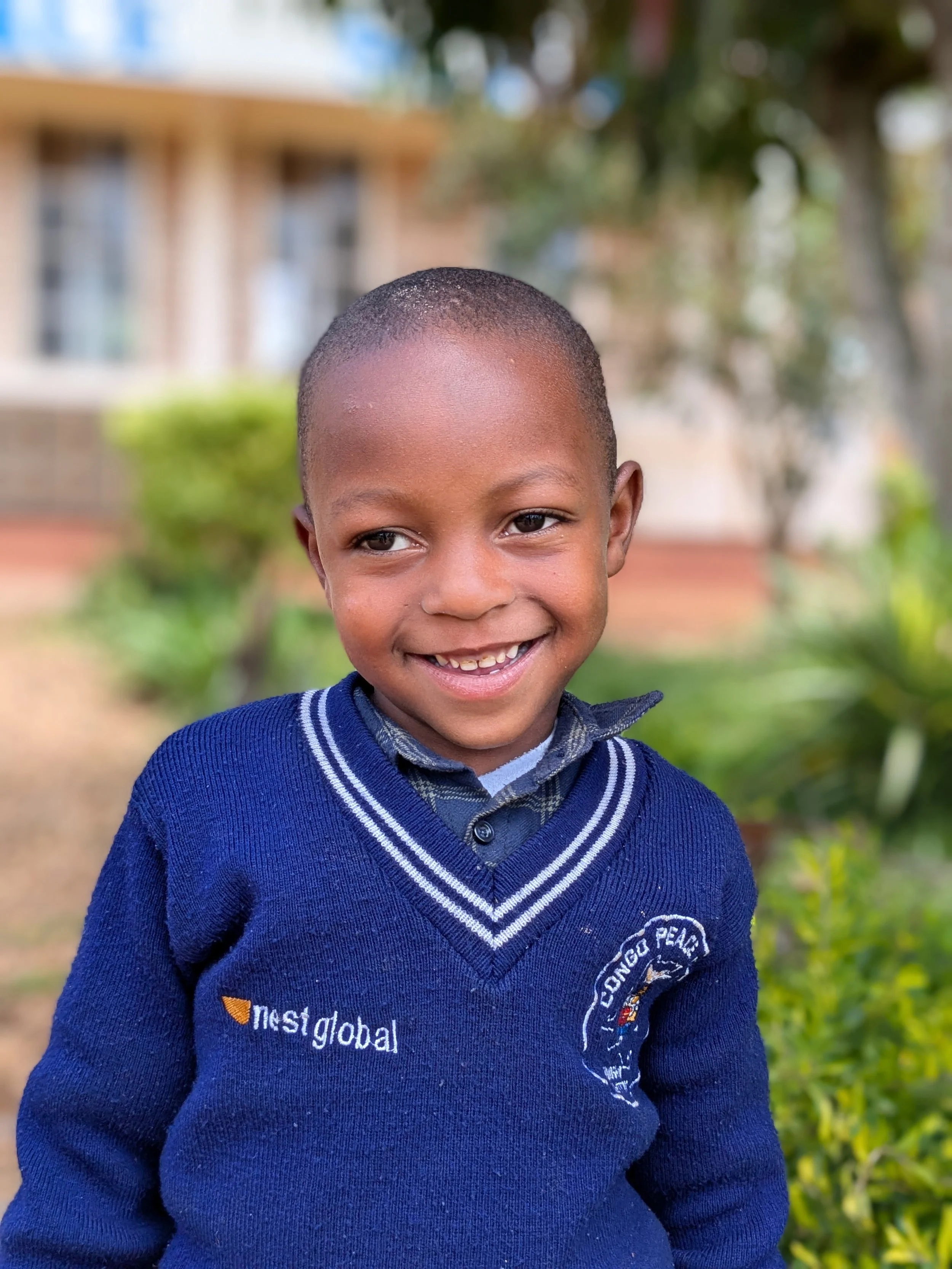
KAMERHE MIGABO GEORGES, 5-year-old boy who graduated preschool (Nest Congo), and is going to begin grade 1 primary in the fall.
“What I’ve really enjoyed this school year is the success I’m going to achieve.
The way I think has changed over this school year. I already know which days we have to be at school, which day is our day off, and which day we have to go to church.
What makes me happy about going to elementary school is the fact that I’m growing up, and it’s a big transition in my life. In elementary school, I’ll start wearing a uniform and good shoes. The difference between preschool and elementary school will be the lessons and the daily homework.
The concept of peace and nonviolence that I learned this year is the spirit of honesty that keeps us from lying.”
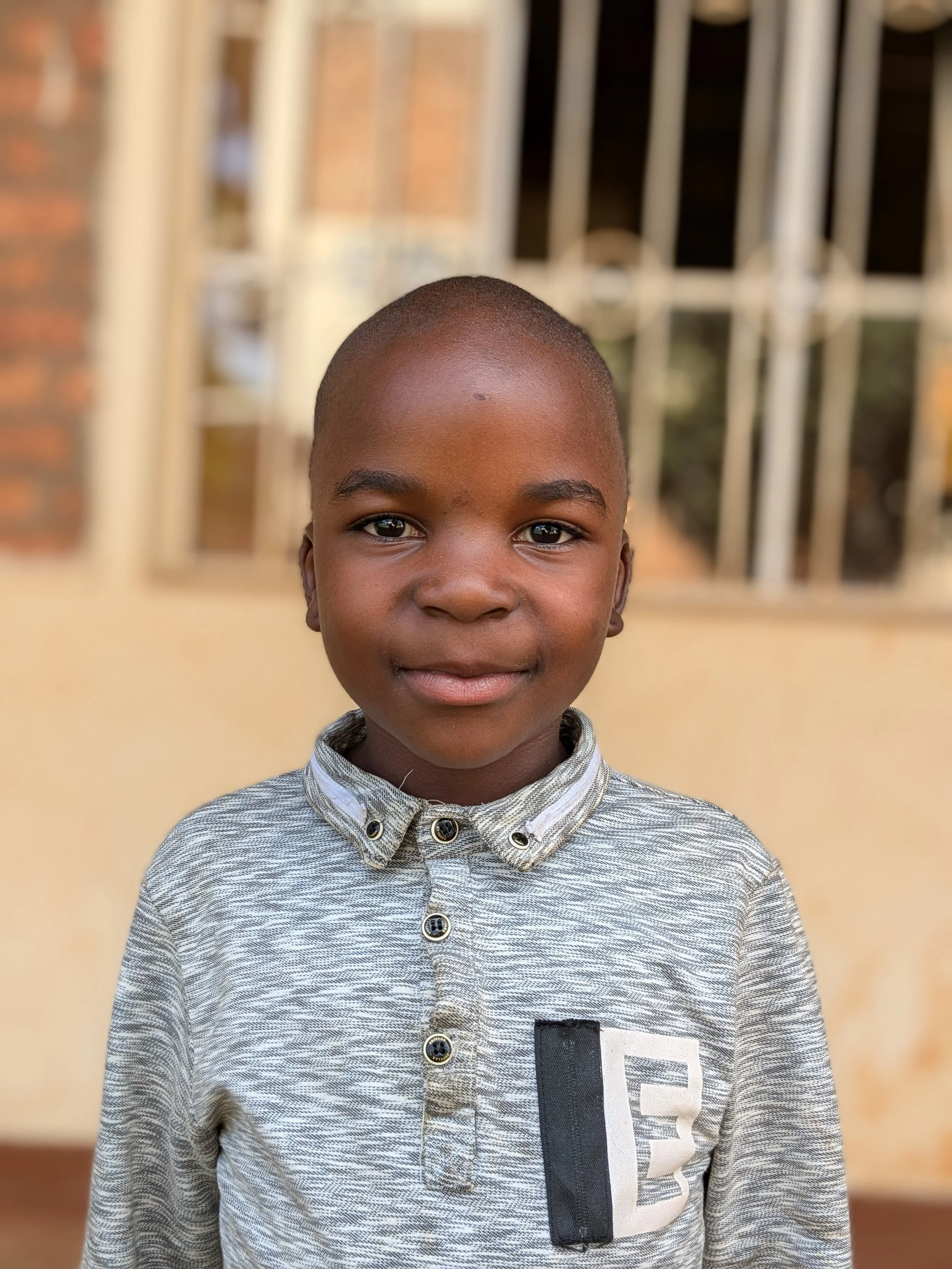
ALIBARIKI MADASHI 5-year-old girl. who graduated preschool (Nest Congo), and is going to begin grade 1 primary in the fall.
“The way I interact with others has changed for the better—even the way I think has changed. This year, I’ve felt a lot of empathy for people who are going through a hard time.
What really excited me about going to elementary school is the teaching style and the homework. The activity on peace and nonviolence that made the biggest impression on me was the one where we learned to love our neighbors.”
CAMPUS TOUR
As we cannot take you to eastern Congo at this time, please enjoy a campus tour to get a sense of the serenity, scope, and peace the Congo Peace School provides to the students, staff, and community. Video here. Volume up to hear the rooster crow and birdsong.
Thank you for your persistence in supporting the mission for a more peaceful, just future for us all – knowing that transforming trauma and providing education rooted in peace and nonviolence can change the course of history. Please share with others to invite them to join the movement to equip students to be the next generation of peace builders!
Ebola & the Congo Peace School: News, needs, gratitude
Thank you for continuing to give your attention to the people of Congo.
As we noted in our earlier post, the Congo Peace School student body and staff immediately began a response to the Ebola outbreak by engaging in safety and prevent-the-spread protocols as best they can, but we need to wire emergency funding to help ensure the most stringent care. If you can make a gift towards this need, please donate here, and note “Ebola” or “emergency” in your donation.
New needs have come up, as expected. As the Peace School prepares to host the national exams, the staff is assessing the wear and tear on water pipes that need to be fixed for maximum sanitation and safety.
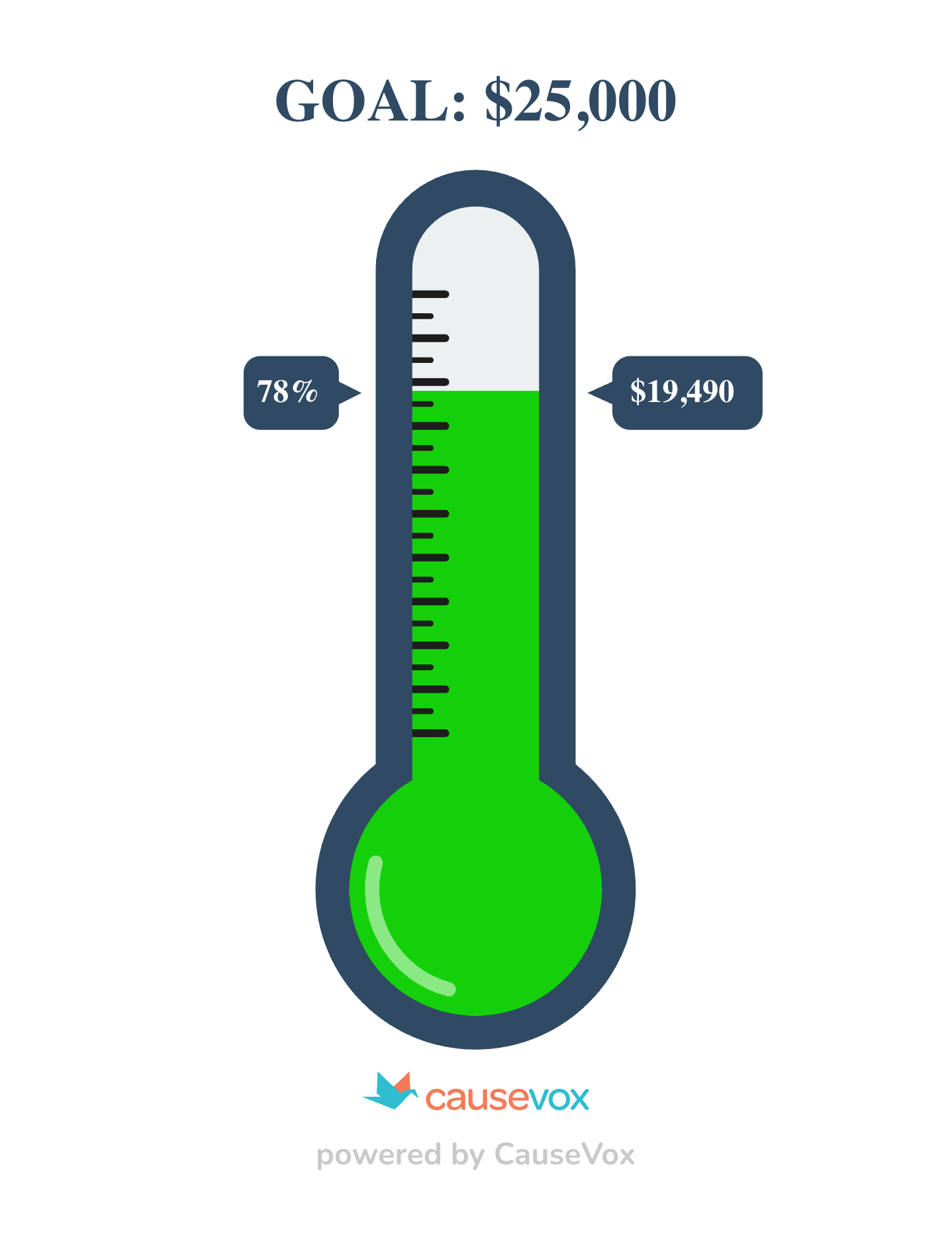
Thanks to an $8500 gift from our preschool partner Nest Global and donors like YOU, we are halfway to $25,000 in support of a broad emergency response, including necessary water pipeline improvements and life-saving needs. Match these generous gifts to help us continue to support students and families during these challenging times.
That funding will serve not only the 600+ students and staff who are daily engaged at the Congo Peace School campus, but their families and surrounding community of more than 80,000, as they take their education about health emergencies in large populations (acronym HELP - something our Founding Director Amani Matabaro was trained in at Johns Hopkins University). Education about how Ebola is spread is critical to stop this from escalating, and part of our needs include printing flyers and posters to reach those in surrounding rural communities.
The people of eastern Congo are already terrorized by the ongoing violent occupation of armed militia – which in turn creates greater risk of spreading Ebola as people flee their homes from violence. Reliable water supplies allow frequent handwashing with soap, the cleaning of contaminated surfaces and safe disposal of waste. The local health facilities treating Ebola patients generate large amounts of contaminated waste such as personal protection equipment, and adequate water is is essential for disinfecting equipment, and laundering protective clothing. In villages, clean water will prevent cholera outbreaks, dysentery and other waterborne diseases that can overwhelm an already fragile health system.
Ebola update:
"On Monday, WHO director-general Tedros Adhanom Ghebreyesus, ... has said the Ebola outbreak is outpacing urgent efforts to scale up a response adding that responders were "playing catch-up'.
"Ebola has also been reported in DR Congo's North and South Kivu provinces, as well as in neighbouring Uganda, where there have been seven confirmed cases." (SOURCE: BBC)
Thank you for your partnership in this life-saving and world-changing work.
In gratitude with our Congo Peace School founding partner The Dillon Henry Foundation,
Rebecca Snavely and Amani Matabaro
Executive Director Founding Director
Congo Peace School Ebola Response & Emergency Funding: Action Alleviates Anxie
Last weekend, news broke about a strain of Ebola in eastern DRC that, at the time of writing this, is a “has no proven vaccine and kills about a third of those infected. So far, the outbreak centred on DR Congo has resulted in 177 suspected deaths and 750 suspected cases.” (Source: BBC) The Congo Peace School student and staff immediately began engaging in safety and prevent-the-spread protocols as best they can, but we need to wire emergency funding to help ensure the most stringent care. If you can make a gift towards this need, please donate here, and note “Ebola” or “emergency” in your donation.
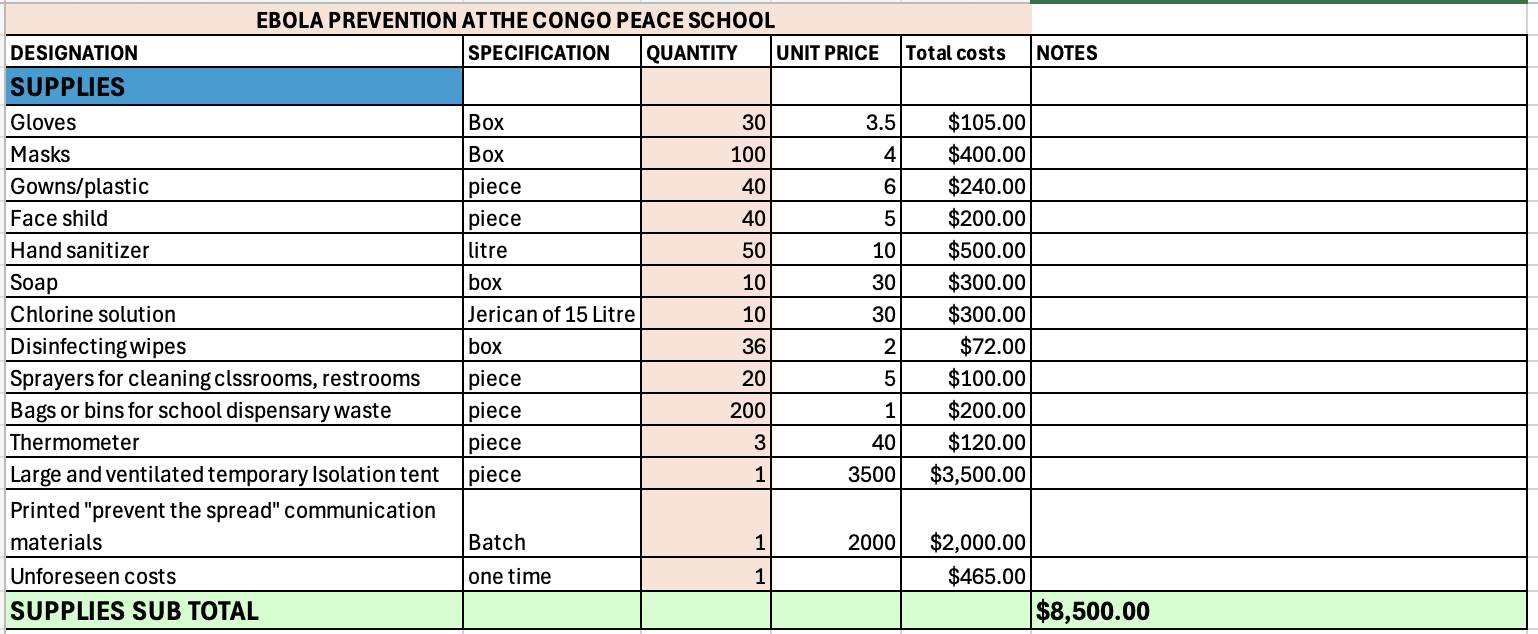
The total needed (see details below) is $8500, for cleaning supplies with chlorine, hand soap, thermometers (every student and staff member will have their temperature taken before entering the campus each day). A ventilated tent will be used for rapid isolation of anyone showing symptoms, before they can be safely transferred to a nearby clinic.
That funding will serve not only the 600+ students and staff who are daily engaged at the Congo Peace School campus, but their families and surrounding community of more than 80,000, as they take their education about health emergencies in large populations (acronym HELP - something our Founding Director Amani Matabaro was trained in at Johns Hopkins University). Education about how Ebola is spread is critical to stop this from escalating, and part of our needs include printing flyers and posters to reach those in surrounding rural communities.
The people of eastern Congo are already terrorized by the ongoing violent occupation of armed militia – it is heartbreaking to put ourselves in their shoes, in their classrooms, in their homes, in the clinics where a loved one enters violently ill, and then, if they cannot be saved, must be buried without the traditional ceremonies due to the risk of spread, even after death. (Reuters article here.)
A friend once taught me the therapeutic mantra “action alleviates anxiety.” One way to take action today is to help the Congo Peace School purchase these preventative tools, as well as to continue to invest in the powerful, live-saving work of the school. You are literally saving lives through your support: students who wouldn’t have enough to eat at home are fed nutritious meals, students who have trauma that might lead to self-harm are given therapy and healing modalities to find self-love and connection to their community. And now, together, we can help prevent the spread of this deadly disease and stop further unnecessary death and grief.
$105 buys 30 boxes of gloves
$120 buys 3 thermometers
$200 buys 40 face shields
$240 buys 40 protective gowns
$300 buys 10 boxes of soap (the Congo Peace School has running water and multiple handwashing sinks)
$400 buys 100 boxes of masks
$500 buys 50 liters of hand sanitizer
$2,000 buys multiple posters and flyers to spread the word and educate folks in rural communities on how to prevent the spread of Ebola
$3500 buys a large, ventilated tent for temporary isolation until an ill person can be safely transferred to a clinic.
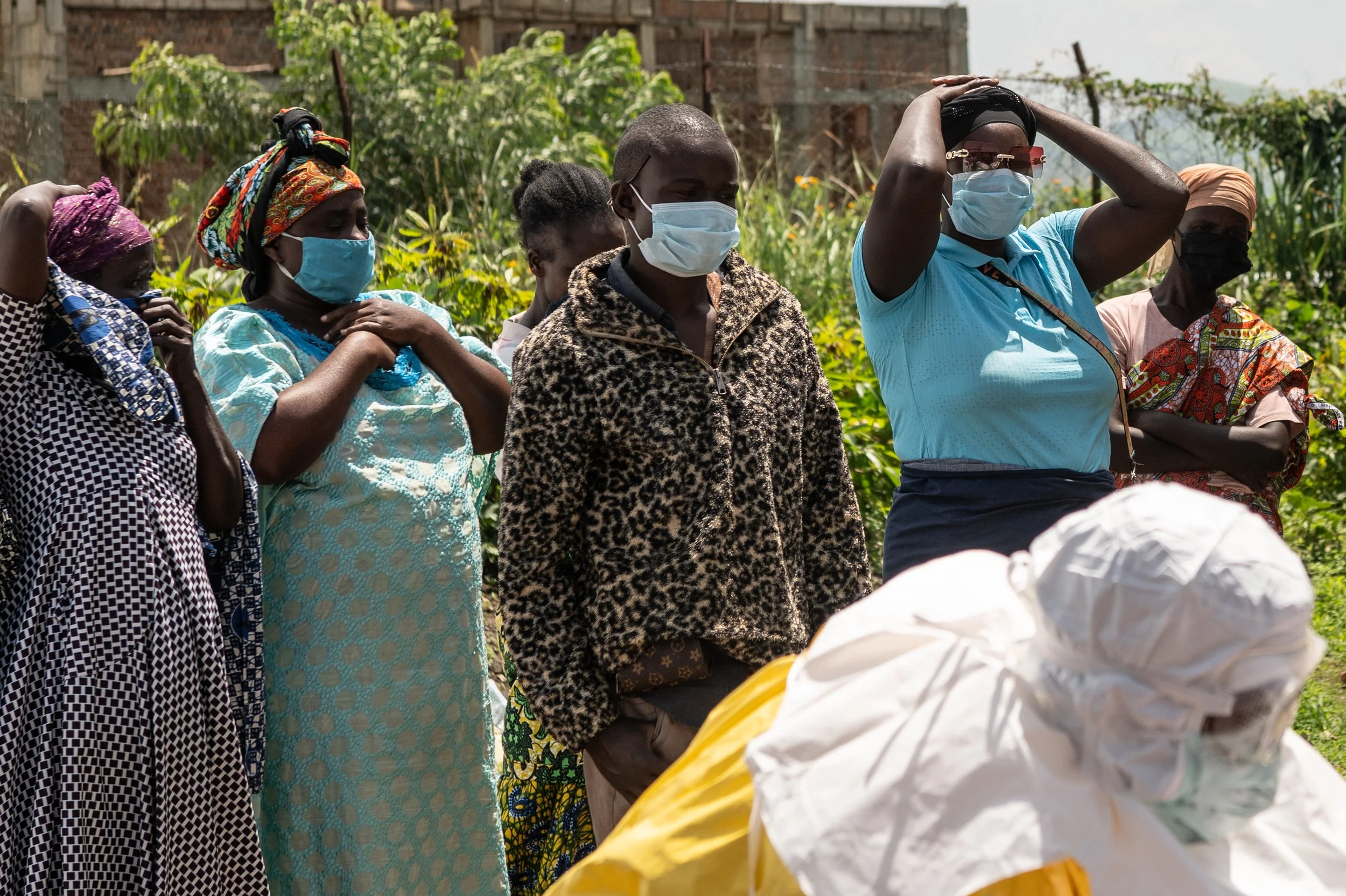
A good follow on Instagram is Moses Sawasawa - @mosessawasawa (the photojournalist who took this photo) - he is thoughtfully reporting on the daily experiences of folks in eastern Congo as the story unfolds.
*See updates on blog feed*
Spring at the Congo Peace School: Positive vs "obnoxious" peace, updates from alumni + tree planting to practice nonviolence
I first heard the term positive peace when I began working with Amani Matabaro. Previously, I’d not been taught much about Martin Luther King Jr.’s concepts of peace and nonviolence beyond the overarching ideas referenced in quotes every February. Amani (whose name translates as “peace” in Swahili), not only amplifies King’s teachings about positive peace, but, through your support, is instilling the foundations of it in the children in eastern Congo, in the midst of war.
In a sermon titled “When Peace Becomes Obnoxious,” King taught that “Peace is not merely the absence of some negative force—war, tension, confusion, but it is the presence of some positive force—justice, goodwill, the power of the kingdom of God.”
Before meeting Amani, I’d not thought deeply about the implications of negative (obnoxious) peace, “this peace of escapism, this peace that fails to confront the real issues of life, the peace that makes for stagnant complacency,” as King explained. From my place of privilege, I’d not explored the question: what does positive peace look like when embodied, and even more so, made real in a region decimated by decades upon decades of violence?
The current war in Congo, this most recent outbreak of active violence that started in January 2025, drags on, despite occasional headlines that give a surge of hope for peace, reports that tout a return to the negative peace that has been the status quo for the people of Congo living in extreme poverty and outbursts of violence while the world is enriched by the country’s rare earth minerals, a norm that Amani and his community of civil society leaders have been working to change for over 30 years. This active war and occupation of M23 in cities in eastern Congo must end, and the implementation of positive peace must be closely monitored, with civil society advocates leading the way.
Through Amani and his community building in Congo, you too are a partner with the people of Congo in creating positive peace, through your gifts of money and attention. Together, we’ve been laying the groundwork for positive peace in building capacity for equality for women and girls and an end to domestic violence and rape as a weapon of war. We’ve been working to eradicate violence in word and deed through trauma healing. We’ve been planting trees to address the climate crisis (read more below). We’ve been planting seeds to feed families and teaching vocational skills and literacy to alleviate extreme poverty. Together, we’ve all been planting seeds of hope and a better future in the students attending the Congo Peace School.
As spring unfolds in eastern Congo, trees are leafing and fruit is starting to grow to feed the Peace School students and their community. Students are continuing to weather the war through the hope for lasting, positive peace that the school teaches is possible.
Six of the graduates of the Congo Peace School [CPS] are currently attending university, thanks to our CPS founding partner, the Dillon Henry Foundation’s Harriet Zaretsky. Harriet embodies putting her money where her mouth is (and heart / soul); when she first heard Amani speak about his dream of a school rooted in the teachings of peace and nonviolence, she found the means to build the campus and then engage many of her community in committing the funds to pay teachers, feed the students, and buy supplies alongside Action Kivu supporters. When the first class of seniors graduated in 2023, Harriet started a scholarship program for six of the top students, three young women and three young men. (We wish we could send more students to higher education, but first we must meet the Peace School’s annual budget, and secure funding for that year-over-year. More on how to help with that below!)
One of the college students recently needed to take a break. The six in university are supported not only financially but also by regular visits from one of the CPS staff members. After speaking to the young man who was struggling, it was agreed he needed to continue in his psychological healing before he could take on the rigors of university.
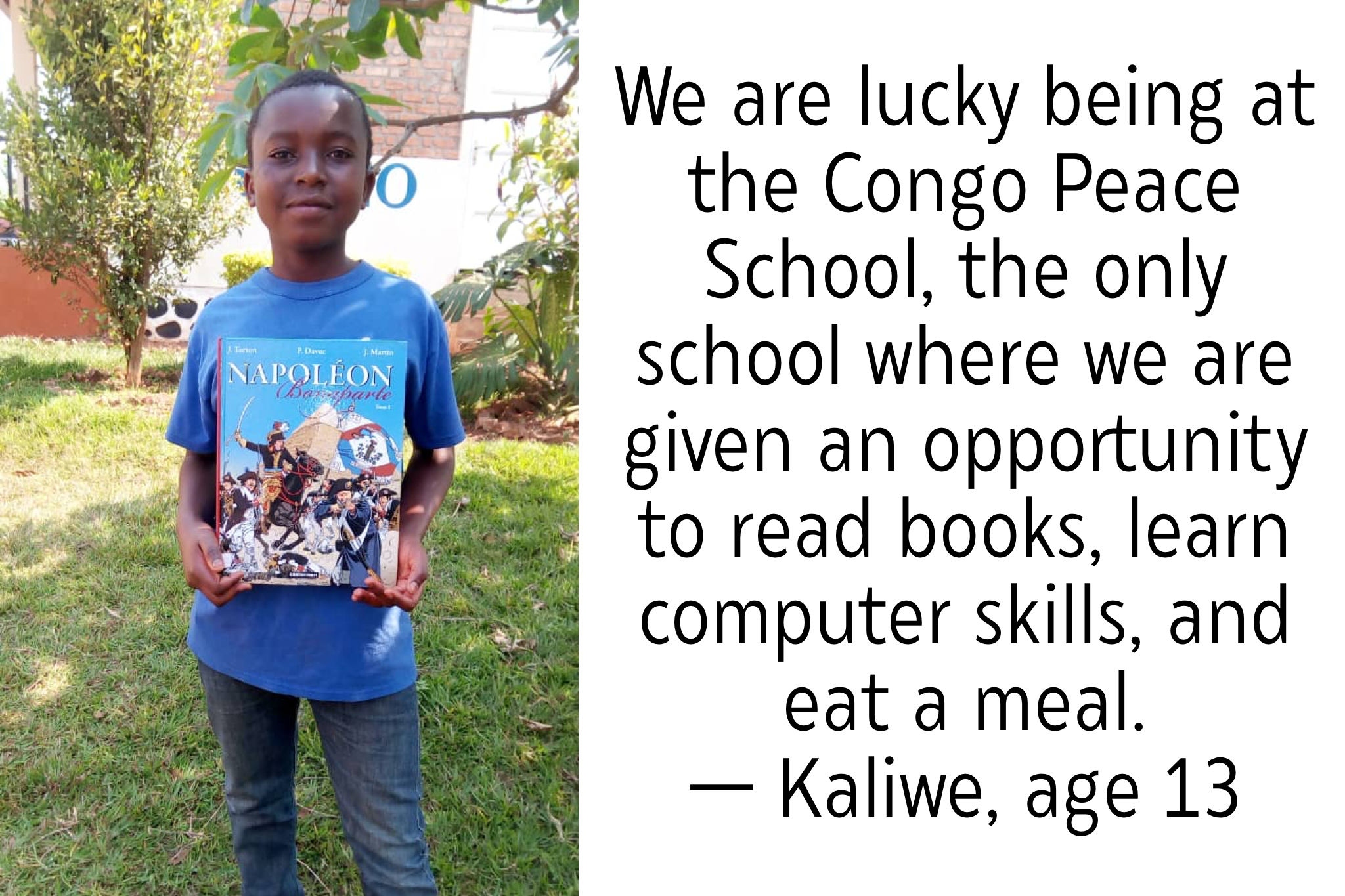
When he stepped away, a CPS alumnus named Kaliwe was chosen to take his place. Kaliwe graduated in 2024 at the top of the class, and is known as “a friend of books,” Amani shares.
We had first highlighted Kaliwe in an update in 2020, pictured holding a book about Napoleon. (Whatever your take on Napoleon, know that Kaliwe was introduced to this part of world history in the context of the Peace School’s curriculum that elevates and platforms local leadership and decolonizing one’s mind.)
Kaliwe today:
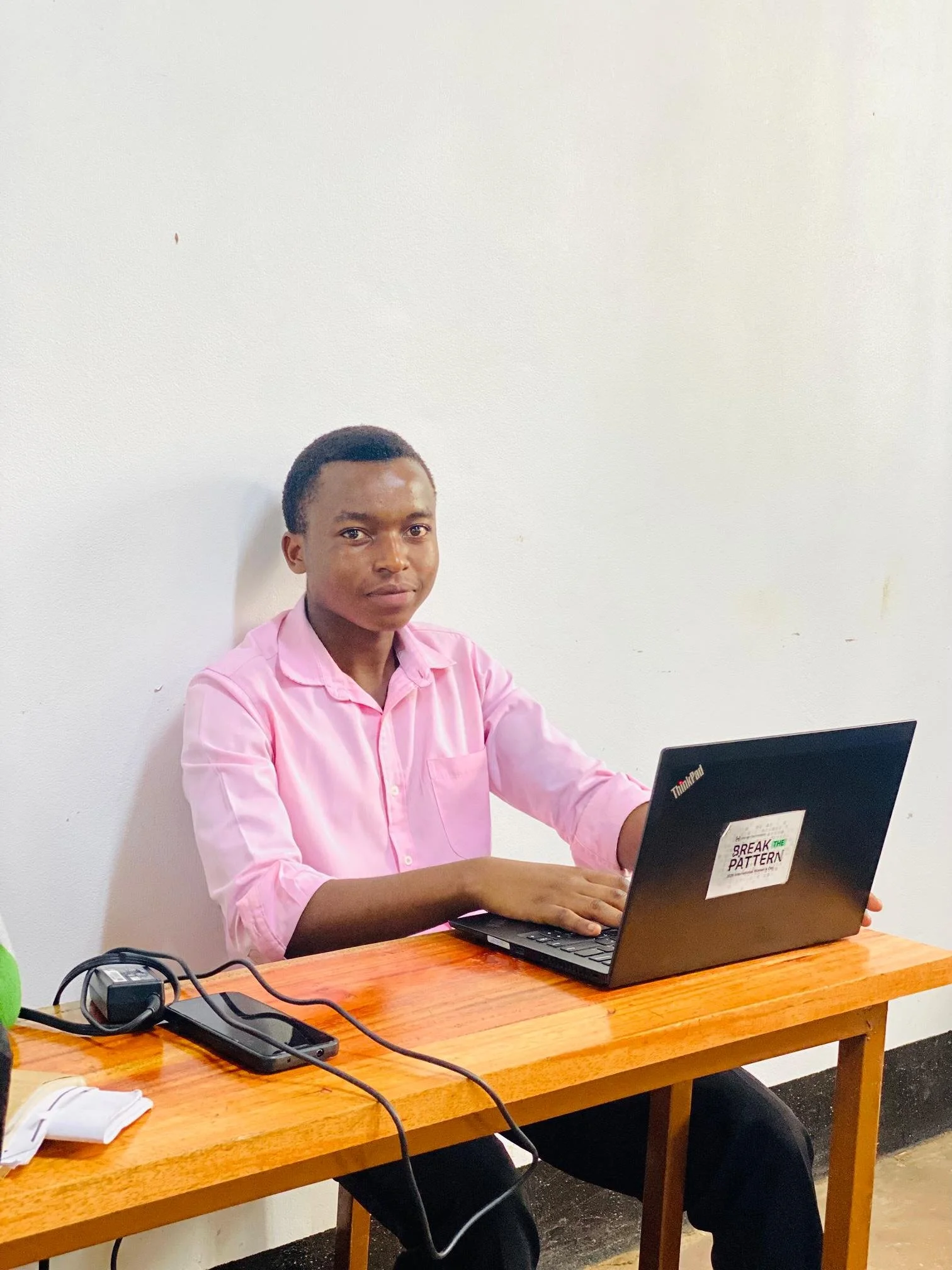
Kaliwe was 11 years old when he first came to the Congo Peace School. He lived with his mother and five older brothers at the time, one of whom was also a CPS student. Now in university, Kaliwe shares: “I am studying Business Information Systems and English. I made this choice thoughtfully, because I am convinced that today's world demands both technical skills and an international outlook. English allows me to communicate beyond my borders and access a vast world of knowledge, while Business Information Systems gives me the necessary tools to analyze, organize, and solve real-world problems in businesses and organizations.
“When I received my state diploma from Congo Peace School, my future still seemed uncertain, but I always held into a great hope and determination. I dreamed of one day setting foot on university campuses and pursuing higher education to acquire solid knowledge and skills that would allow me to build a better future. Despite everything, I remained determined to move forward and not abandon my ambitions and dream. I had nobody to support my university education until the founder of the Peace School sent Mr. Bertin to ask me if I could take a spot of a student who had stepped down and that day was a big joy in my lifetime.
“For me, education represented a gateway to a better future. I wanted not only to succeed academically, but also to become someone capable of making a positive contribution to my community and my country in general.
“After completing my university studies at the Universite Officielle de Bukavu, if possible, I would like to pursue a master's degree in either data science (artificial intelligence) or computer networks. My goal is to deepen my knowledge in one of these strategic fields in order to better understand and master modern technologies. I am convinced that these fields play a vital role in the development of today's world and especially the DRC which needs to make good use of its critical minerals and Artificial Intelligence and IT skills have a great role to play in this sector. In the long term, I hope to use these skills to contribute to a better future for the DRC, by providing technological solutions adapted to the realities of our country, particularly in systems management, communication, and innovation, despite current challenges (the war in the East). I also want to be part of this generation working for peace, progress, and stability using my academic skills.”
We asked Kaliwe, What would you like people in other parts of the world to know about you and about Congo Peace School?
“I would like people in other parts of the world to know that, despite the challenges we face, particularly in eastern DRC, I remain determined to continue my studies and build a better future. There is war going on and we need solidarity of the rest of the world to step in and put an end to this war.
“As for me, I would like them to understand that I am a committed young person, driven by a desire to learn, grow, and contribute positively to my community. My journey hasn't always been easy, but it has taught me resilience, perseverance, and the importance of never giving up on one’s dreams. I am who I am because of the solidarity of the supporters of Congo Peace School.”
Amani asked the same question of Samuel, one of the university students and Peace School alumni. He texted Amani the following:
Congo Peace School, Beacon of Hope
“In a world where education is often a luxury, the Congo Peace School is a beacon of hope. Congo Peace School is more than a school, it is a fountain where broken and stolen dreams return to life, a place where broken hearts regain courage. Many among those who were about to give up regain strength and move forward. When you see darkness, Congo Peace School is a candle of light.
“Congo Peace School is that hand we have been given to move towards a bright future. Congo Peace School is that voice that you hear every day telling you that you can make it, you can achieve your goals. It's a school from where you do not get only the intelligence from books, but you grow with positive character, hope and peace within. Many young people like me who thought there was no hope for a new future, that school made me feel everything was just beginning.
“Thank you to this school that is building leaders, shaping a destiny and is a living example of how peace is built from within and through education. May Congo Peace School live longer and keep educating our spirits and remain that place to heal our souls.”
I don’t know about you – but I needed to hear all of this from these students today. As Amani has said so many times, the world is torn apart, but together, we can repair the world. We cannot do this without you!
Ways to take action to keep the Congo Peace School open, educating children, and providing the means for lasting positive peace:
1. Donate! A huge thank you to those of you who give annual gifts as Guardian Donors (folks giving $5K or more at a commitment of three years) and those who give generously either annually or monthly via Patreon or our Action Kivu website. If you’re not committed financially, please consider even $3 a month. We know times are extremely tough for many right now.
2. Invite others to partner with the people of Congo: host a small gathering, a coffee meet-up, a dinner, and share some of the stories from Congo and why you continue to turn your attention to the children and their communities there. Invite others into the movement for peace through healing and education. More stories are here.
3. Introduce us to a board member of a foundation you know! We can take it from there, setting up a zoom with Amani and beginning that relationship of trust.
GROUNDEDNESS & TREE PLANTING:
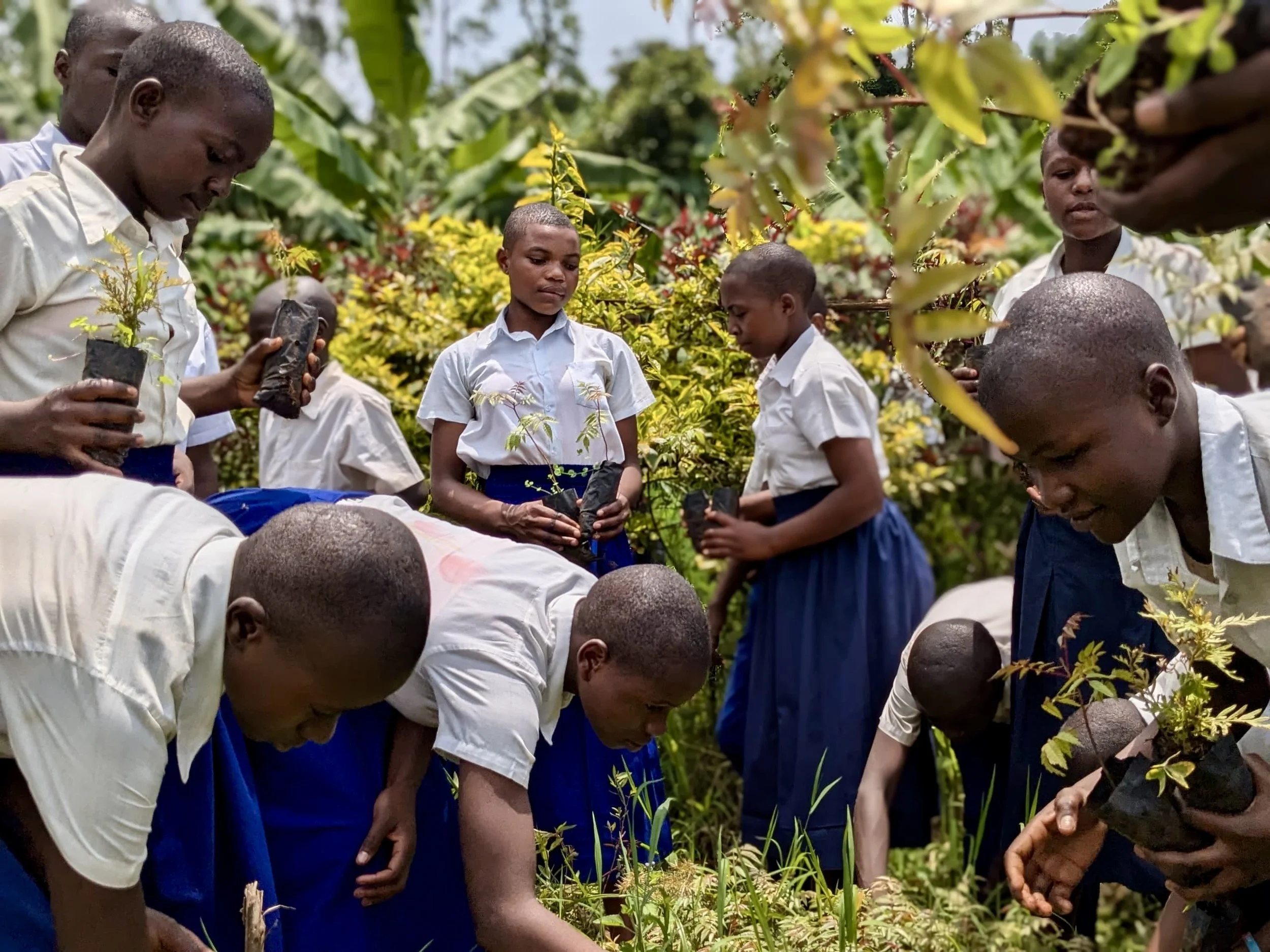
Within the Peace School’s curriculum, the students and staff learn not only the six principles of nonviolence from Martin Luther King, Jr., but also 64 daily practices, linked here. Earlier this spring, the Peace School students focused on the nonviolence practice of groundedness, learning to consciously calm oneself in difficult moments by remembering our connection to the ground and to our environment. The practical aspect of the lesson took the students outdoors, to plant seedlings. The marsh farm near the school that Action Kivu has long supported for community farming, animal husbandry, fishing ponds and regenerative farming practices offered the nursery space for the seedlings to grow and be planted during rainy season in March.
Each secondary school student planted three trees, mindful of their connection to the earth as they dug their fingers into the rich soil, as well as contemplating how the trees play a role in combatting climate crisis and preventing the degradation of the soil, shoring up the land against biodiversity loss and pollution. Inherent in the hands-on approach of learning the principles of nonviolence, the tree planting is also an implementation of Zero Waste Education, empowering future generations. This summer, the nursery will yield fruit trees for each student to take home and plant at the community level, to provide nutrition for local families.
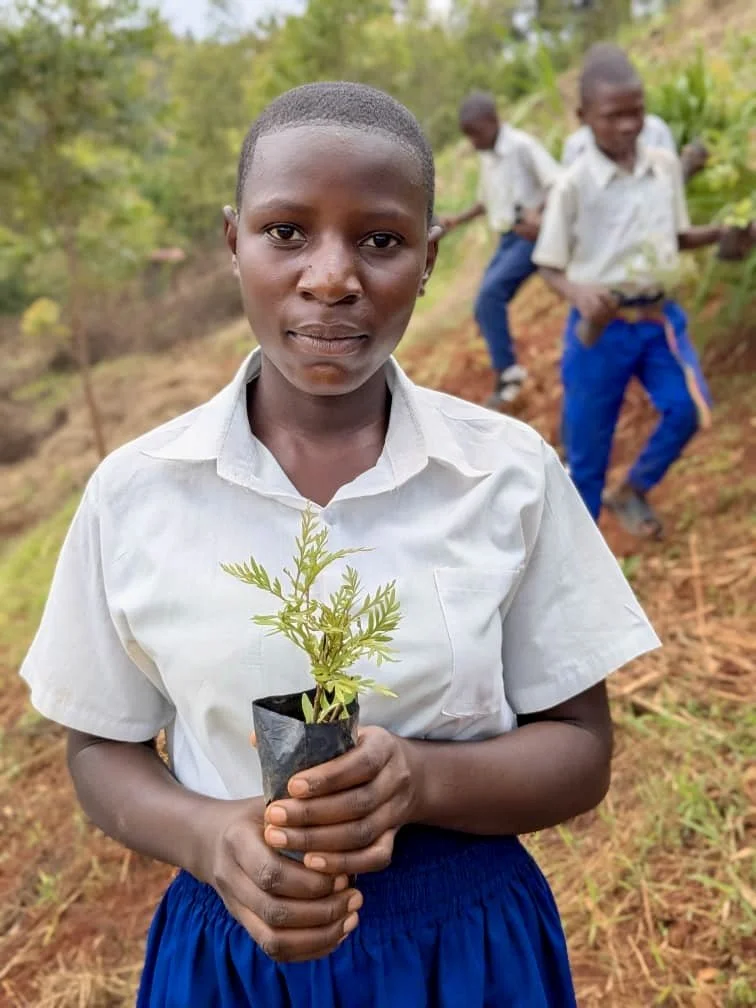
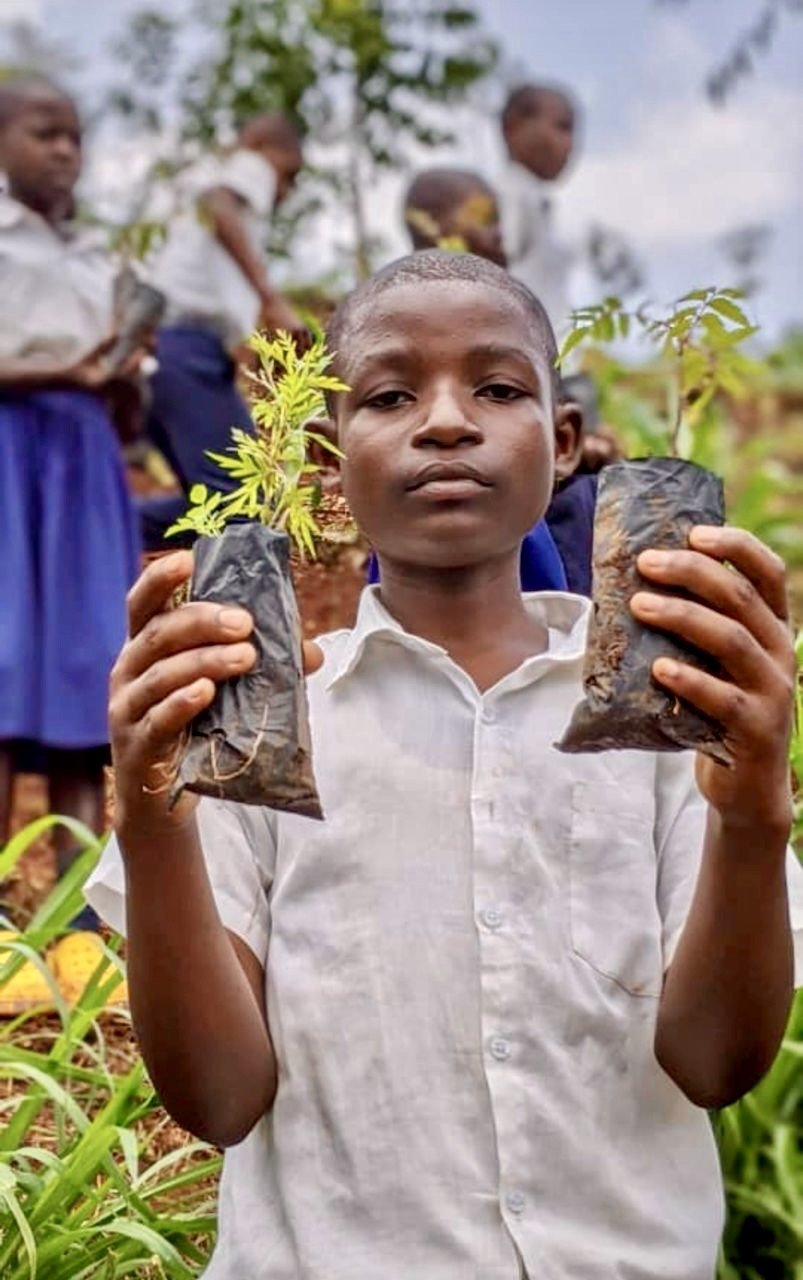
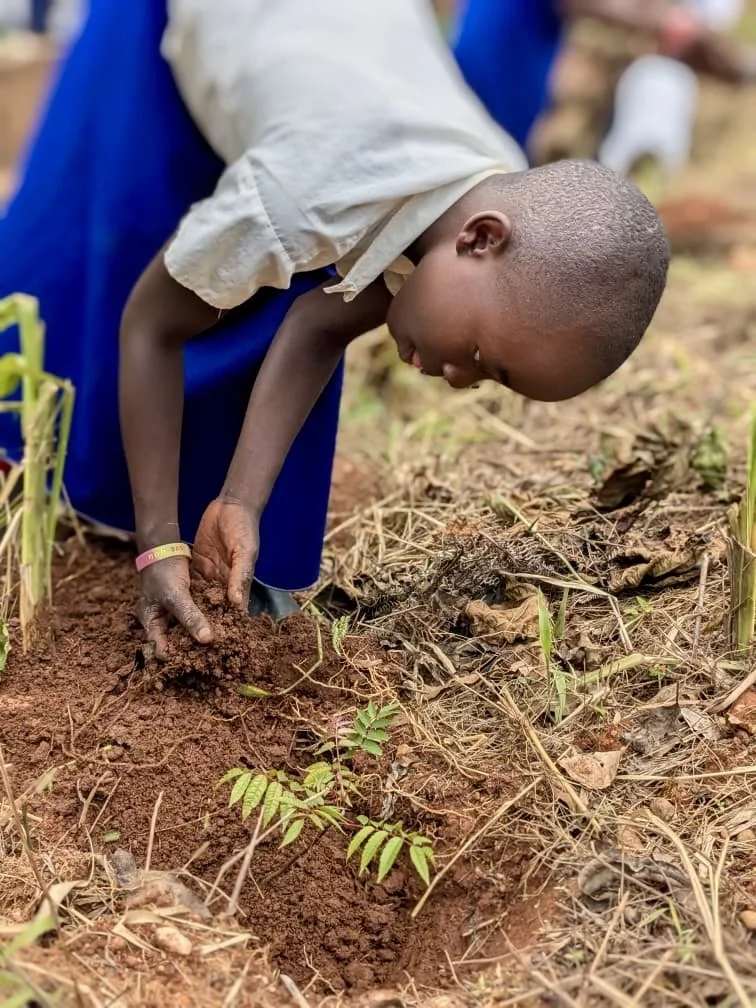
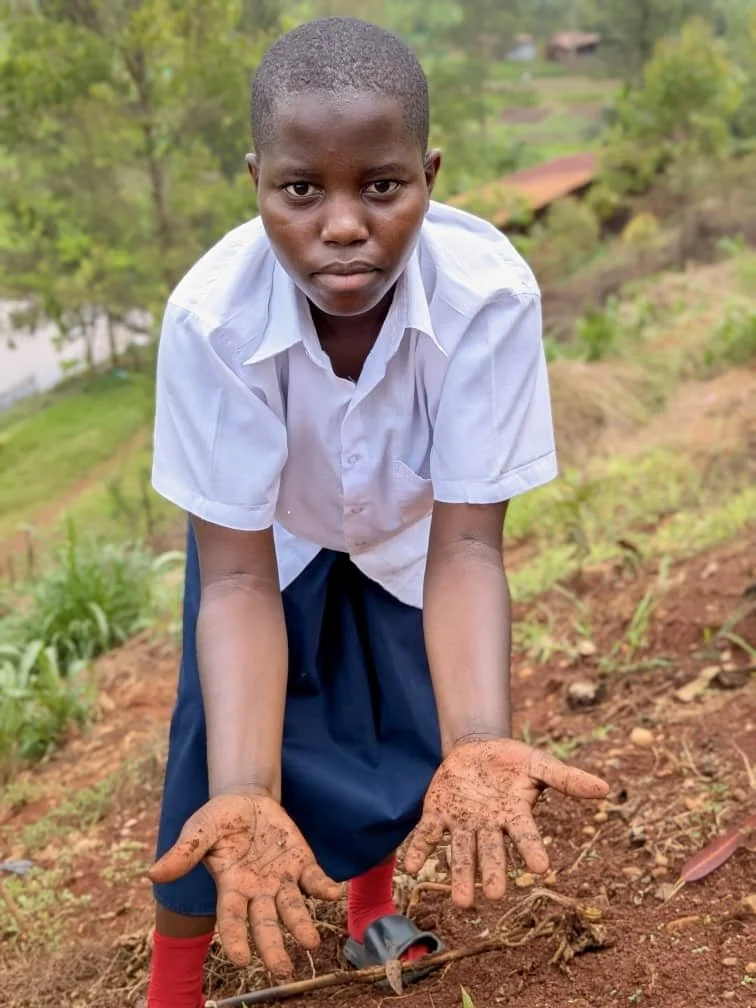
This final photo is Anouarite, a student whose path we have highlighted since the construction of the Congo Peace School. At that time, Anouarite had joined the adult women’s literacy program, so desperate to get an education that her family could not afford to give her. She boldly asked Amani if she could be a student when the Peace School opened, and has flourished ever since.
May Anouarite’s open hands, covered in the rich dirt from planting trees that will bring her community cleaner air and fresh fruit, be a reminder of our gratitude to you for investing in the lives of the children of Congo, in healing trauma, and in creating positive peace for us all.
Unreported stories of war, plus hope, curiosity, and healing at the Congo Peace School
Driving to the grocery store and listening to the radio, I heard the words “in eastern Democratic Republic of Congo, government forces supported by militia groups are engaged in fierce fighting with M23 rebels backed by neighboring Rwanda.”
I audibly gasped – a news story on All Things Considered about the war in Congo? With all the horrors in the world’s and nation’s news cycles, it’s not common to hear about DRC without specifically searching for a story. (And with all the horrors of the news cycle, we appreciate you turning your attention to Congo right now, and sharing in the stories of the folks who are so often overlooked while we all benefit from the wealth being extracted from their country.)
The story is not a run of the mill report, but in merely four minutes they speak to soldiers and survivors and touch on some of the causes of the war. One soldier with the Congolese army noted that he has not been paid in six months. How does one survive without pay, you might ask (as we all hear increasing reports of AI taking jobs). If you’re a civilian, people are NOT surviving.
Below, reports on how the war, now over a year old, is killing folks through hunger and preventable disease, and how your partnership with the Congo Peace School community is actually saving lives.
Also below, some of the students share what life has been like for them at the school during these first months of the new year, and send a message of thanks.
And lastly, we need your help / connections / ideas for a musician for an upcoming fundraising event. The backstory: for several years the Congo Peace School has been generously supported not only by you, but through our Founding CPS Partner the Dillon Henry Foundation, we have received annual funding from the Judy Bork Trust, ranging from $50K to over $100K per year. That support has come to an end, as planned by Judy herself, to fully spend the trust in a specific period of time. We are so grateful for that support, and received some sustainability funding from the trustees as well, and plan to use some of the funds towards a big fundraiser to bring more and more people together and raise some significant money to keep this critical school open.
To do that, we need a name that will draw people who will buy tickets! Do you have a connection to a popular, amazing musician that you could introduce us to? Other ideas to find someone? Email me (Rebecca) at actionkivu@gmail.org.
Unreported effects of war
Our Founding Director Amani Matabaro shared how before the war, the women in the Mumosho community used to earn small amounts of money through small shops, selling goods to local Congolese neighbors that they had purchased wholesale across the border in Rwanda. With the sales, they were able to feed their children a small amount of food each day. Mothers, Amani said, used to do cross-border trade, to keep their children alive.
The war has closed borders and banks in Congo. For those women who *are* able to cross into Rwanda, they are no longer offered wholesale prices, so there is almost zero profit for their labor. Women are not able to feed their children. Even more students at the Congo Peace School only eat because of your support and our cafeteria. (With the banks closed, our team has created a workaround with checks and mobile money, and your donations are making the most impact possible.)
The destruction of USAID support in Africa without a plan in place for local communities to work towards building that infrastructure has also killed people who were depending on medicines and vaccines – your support of the Congo Peace School, whether it is through a financial gift, a bake-sale, or connecting us to others who can help, will save lives, and invests in a future of peace-filled leaders. As Amani often reminds us, trauma not transformed is transferred.
These students are transforming their trauma:
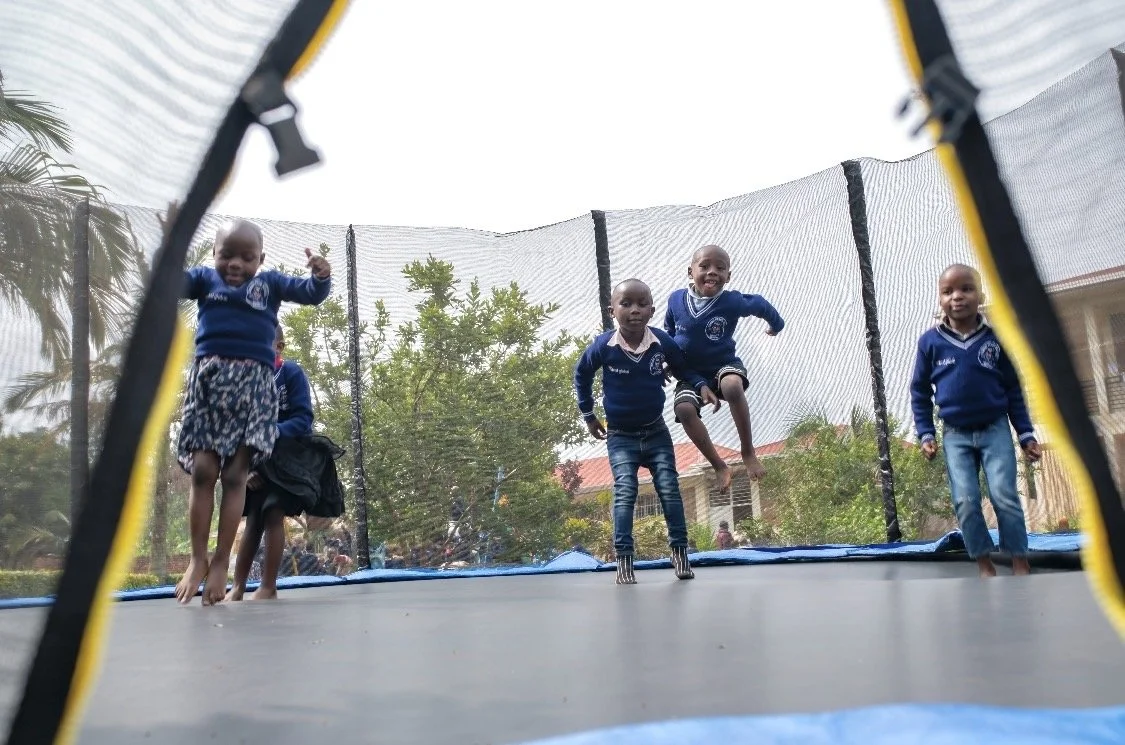
Young students in blue Nest Global sweaters (the Congo Peace School’s preschool partner) bounce on a trampoline inside a safety enclosure.
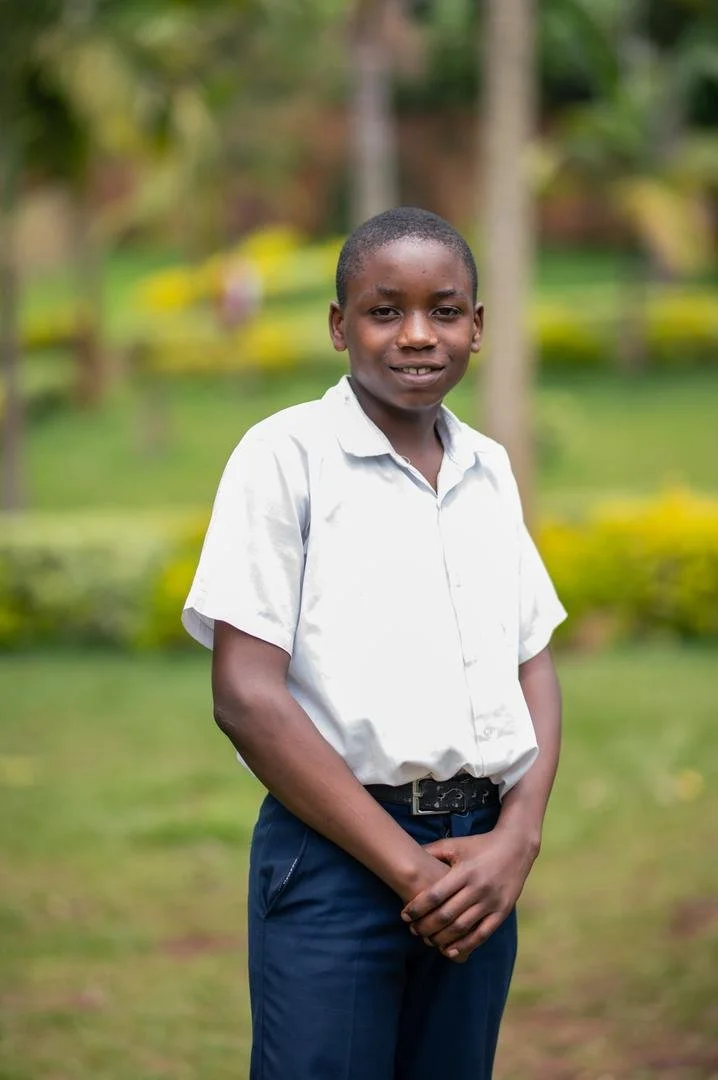
Bahati Akonkwa Emmanuel
“I am in 2nd grade of secondary school (7th grade in the U.S. system) at the Peace School, and I’m 13 years old. I live with my grandmother; I don’t know where my parents are since this war broke out. This is the most difficult situation I’ve ever lived in my life. I am praying every day to see this war come to an end. I like the Congo Peace School, at least [here] you have support when you feel exhausted, hopeless and anxious, our school trauma program is highly helpful.”
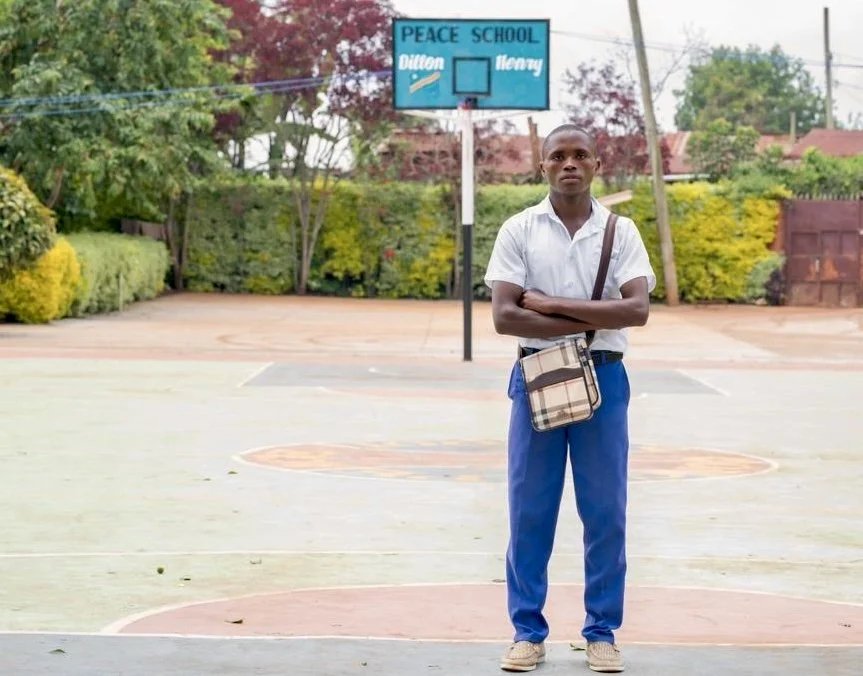
Mwaka Munguakonkwa Jean de Dieu
“I am 18 years old, in the 5thgrade of secondary at the Congo Peace School (11th grade in the U.S. system). I live with my mother, my father passed away. I have five brothers and two sisters. My mother sustains us as a family by doing small scale agriculture after her other small trade business was ended when the war in our country broke out. I am here at the Peace School as a new student as we were forced to flee our home and learned the surrounding area of the Peace School was safe, and this is how we settled in Mumosho. The Peace School is better than where I was studying before. Peace and Nonviolence are good subjects to talk about even if there is war going on right now in our country. This war is all about minerals, we did not know before until we started seeing almost all the agreements are about the minerals the DRC has.”
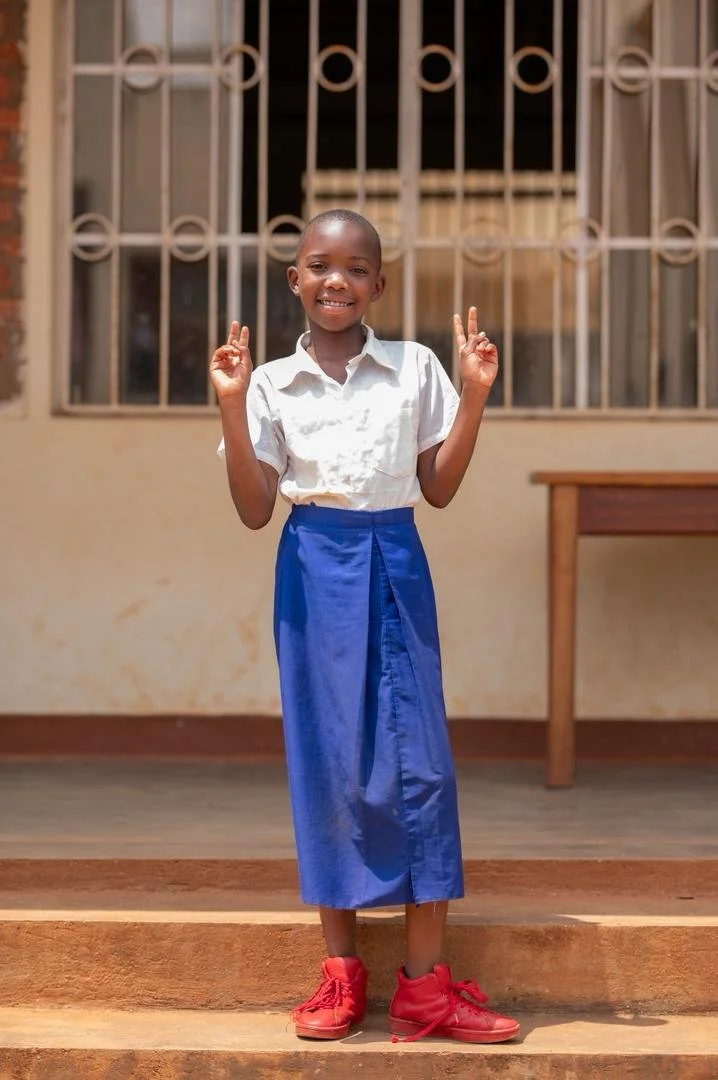
Faraja Mihigo Nice
“I am 10 years old, and am in 5th grade of elementary school at the Peace School, which has become home for me. This time of war is very difficult, we are suffering. We are living with fear because you do not know what could happen, anything could happen any time. We have no money to buy food, medical care, and other things we need. I wonder if the Congo Peace School was not taking care of us what would happen, maybe we would have died.”
Amani shared recently how it feels the world has turned away from the suffering of the people of Congo. World leaders know that the critical minerals are being smuggled across the border to Rwanda, washed and put into our supply chains, making all of our lives easier and richer, with our cell phones and laptops and electric cars and airplane engines, blood minerals that fuel a life that these innocent faces have to endure in fear of violence and not knowing if they will eat enough to survive.
We are grateful beyond the words we have to express the gratitude, that you have turned your attention to the innocent children of Congo. For you to share these stories with others so our circle of connection and work for peace around the globe continues to grow. That you are investing in a future of peace and social justice for us all by investing in peace in Congo.
“Thank you so much to Congo Peace School! Thank you! Asanteni!”
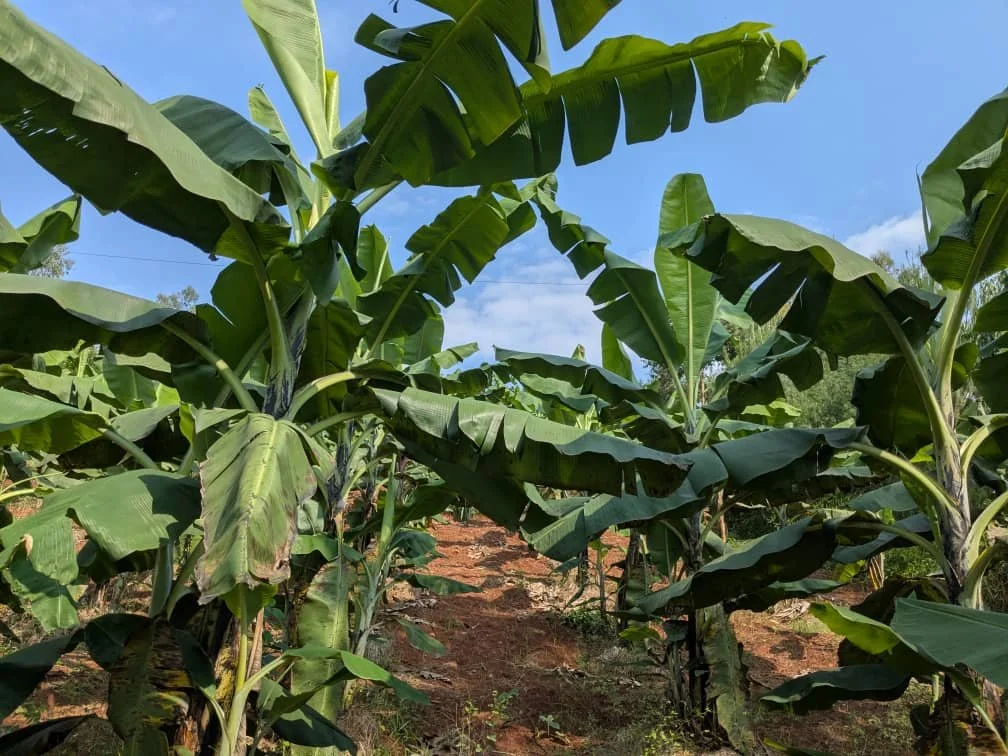
Bonus: We will soon have bananas to supplement the students’ meals! Amani’s daughter Blessing majored in agronomy in university, and wanted to put her new knowledge to use to benefit the students at the Congo Peace School. The young banana trees were purchased with Action Kivu funds from an agricultural research center, and will be part of the regenerative farming plan, especially necessary after a company working on the road above the marsh farm dumped infertile dirt onto the land. We will soon know more about the harvest yield and will share that with all of you, our beloved community.
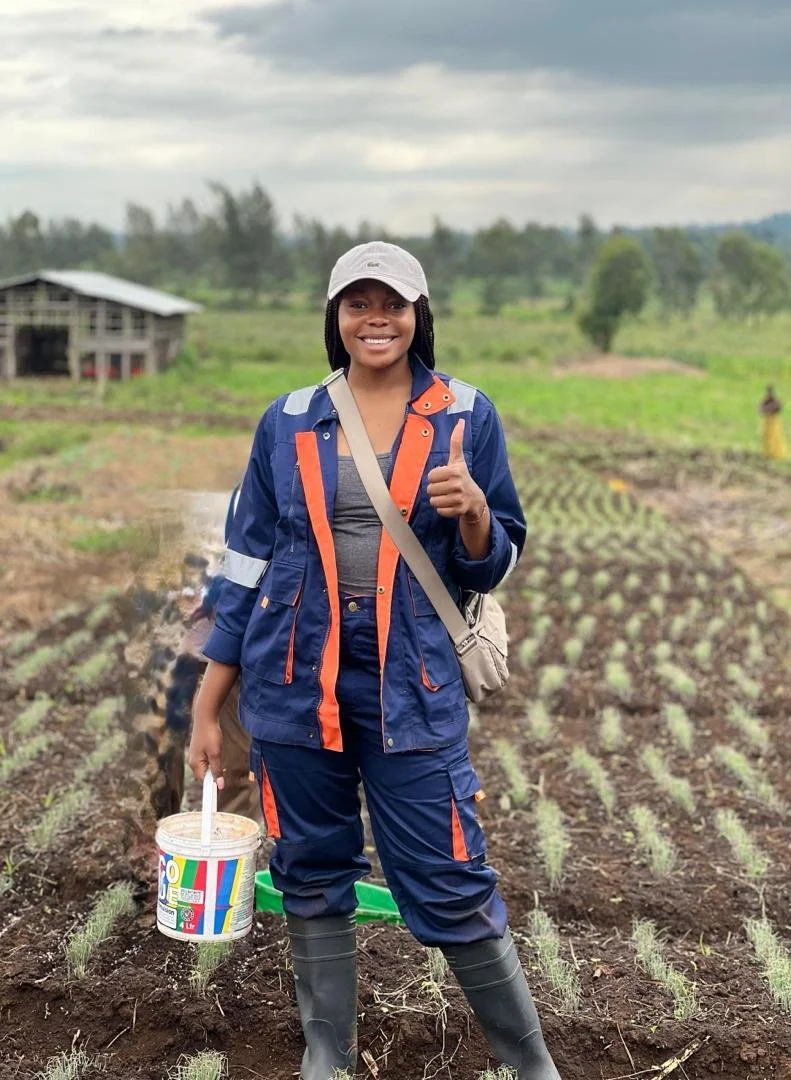
Blessing at work
Take action for these kids in Congo:
Share this post with one person you think may not know about the Congo Peace School
Read or listen to the four minute news report here.
Call your representatives and let them know you want the U.S. to take more action to end Rwanda’s support of the M23 and their takeover of Congo and its minerals. (Read the latest DRC News Monitor from our friends at PAEMA to learn more about the latest news from Congo.)
Host a baking party for a sale or dinner party in which you read about Congo and talk about our connection with the people there.
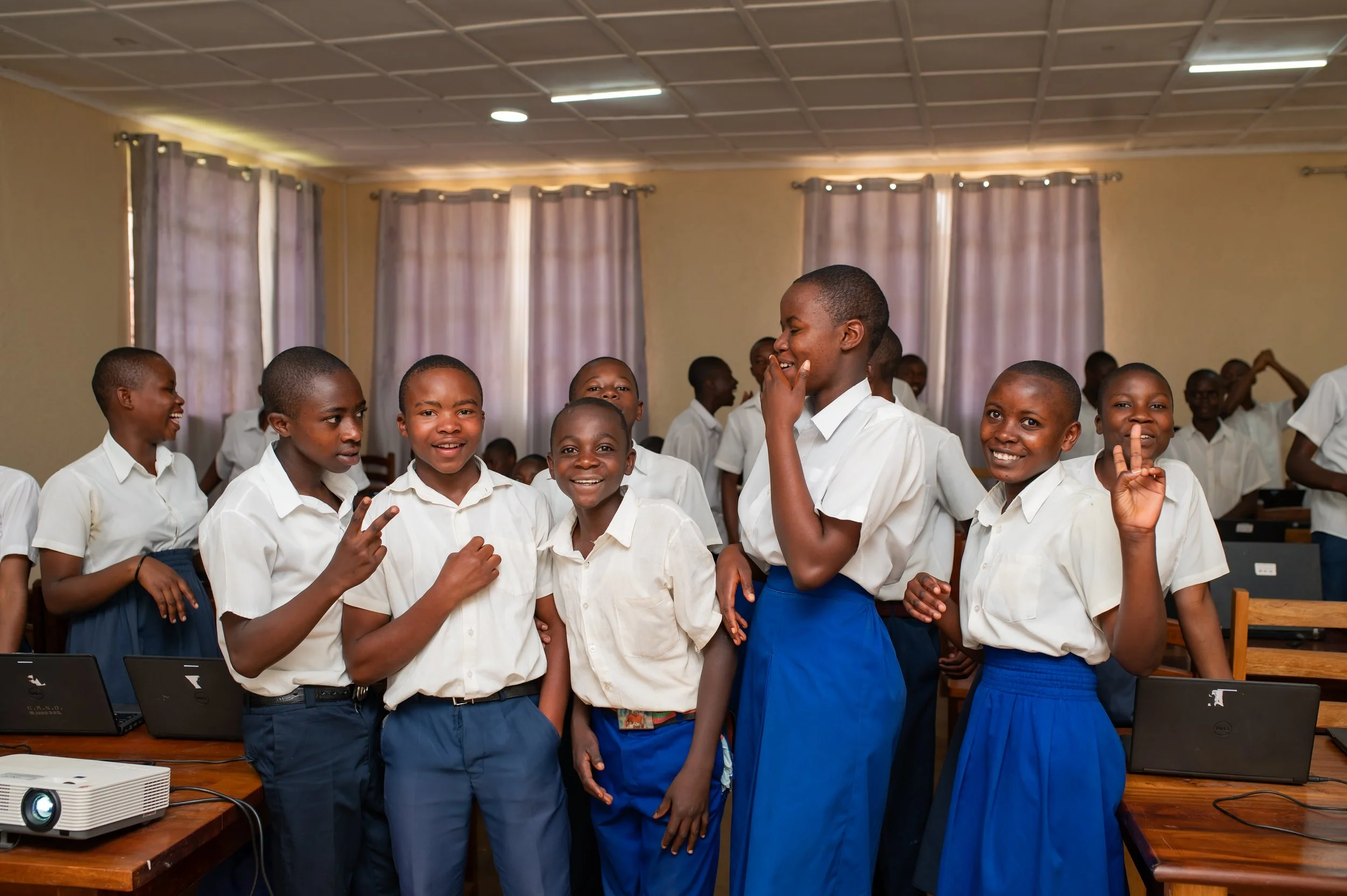
Donate – your gift helps us keep the doors open so these children can access a quality education rooted in peace, nonviolence, and equality, healing, curiosity, and joy.
-
2026
- Sep 25, 2026 Karibu (Welcome) :: Back to School in Midst of War Sep 25, 2026
- Jul 11, 2026 Congo Peace School Update: Class of 2026, Ebola Prevention, Student Reflections, + a Campus Tour (Video) Jul 11, 2026
- May 26, 2026 Ebola & the Congo Peace School: News, needs, gratitude May 26, 2026
- May 23, 2026 Congo Peace School Ebola Response & Emergency Funding: Action Alleviates Anxie May 23, 2026
- May 12, 2026 Spring at the Congo Peace School: Positive vs "obnoxious" peace, updates from alumni + tree planting to practice nonviolence May 12, 2026
- Feb 25, 2026 Unreported stories of war, plus hope, curiosity, and healing at the Congo Peace School Feb 25, 2026
-
2025
- Dec 22, 2025 Blank Chalkboards, Roses, and Our Attention: Congo Peace School and Peace in the Midst of War, with Messages from the Students Dec 22, 2025
- Sep 19, 2025 Amidst war, the Congo Peace School celebrates the class of 2025, and starts a new school year with song Sep 19, 2025
- Aug 23, 2025 CPS Summer Update: Voices from Congo as the war rages on, despite peace processes Aug 23, 2025
- Jun 25, 2025 The Puzzle of Peace: Update from the Congo Peace School and news from DRC / Peace Agreement Jun 25, 2025
- May 8, 2025 The War and the Congo Peace School: a brief overview to share + video May 8, 2025
- Apr 25, 2025 A Declaration of Peace and Words from Peace School Students Apr 25, 2025
- Apr 7, 2025 The War and the Peace School: humanitarian aid, actions to take, and a fable from Congo Apr 7, 2025
- Mar 11, 2025 The Peace School remains open, a podcast rec, and more Mar 11, 2025
- Feb 26, 2025 Peace School Reopens Amidst M23 Occupation and Advances Feb 26, 2025
- Feb 20, 2025 Update from Congo War: The dam breaks, and what a barrage looks like Feb 20, 2025
-
2024
- Nov 14, 2024 Lessons in Courage (and French): Sept & Oct at the Congo Peace School Nov 14, 2024
- Sep 6, 2024 First Distribution to Internally Displaced Peoples Camps (IDP / CPS Campaign) PHOTOS Sep 6, 2024
- Aug 23, 2024 "I thought university was only for children of the rich..." Congo Peace School alumni now in college share their stories Aug 23, 2024
- Jun 11, 2024 To Understand the Power of Justice: Students reflect on Martin Luther King Jr.'s Principle Six (Nonviolence) Jun 11, 2024
- Apr 25, 2024 The Meaning of Spring at the Congo Peace School Apr 25, 2024
- Jan 25, 2024 Action Kivu's Amani Matabaro: Co-Author on Paper About Intimate Partner Violence in Conflict-Affected Settings Jan 25, 2024
- Jan 12, 2024 Revolutionary Education! How the Peace School / Congo Nest Preschool is Creating Fundamental Change Jan 12, 2024
-
2023
- Dec 15, 2023 Congo Peace School Students' Hopes, Lives, and Interpretations of MLK's Principle Four Dec 15, 2023
- Oct 30, 2023 UN Report on Children in Congo & MLK’s Nonviolence Principle Three - Oct 2023 at the Congo Peace School Oct 30, 2023
- Sep 13, 2023 100% Success! Congo Peace School National Exam Results Sep 13, 2023
- Sep 11, 2023 Back to School! Class of 2024 Goals, Summer Sculptures, & Computer Class Sep 11, 2023
- Jul 17, 2023 Welcome to Graduation Day at the Congo Peace School (the first ever!) Jul 17, 2023
- Jun 12, 2023 Menstrual Hygiene Day w/ Sanitary Kits & Sex Ed Jun 12, 2023
- May 10, 2023 What makes these students smile, and how it's part of the practice of nonviolence May 10, 2023
- Apr 5, 2023 March at the Congo Peace School: Women's History *and present, and future* Month: Female students and staff share how their lives have changed Apr 5, 2023
- Feb 17, 2023 The Key to being Unstoppable: Amani on the Power of Education and an Update from the Congo Peace School Feb 17, 2023
-
2022
- Dec 2, 2022 Messages from Congo of gratitude and hope in action Dec 2, 2022
- Oct 21, 2022 New Videos: Congo Peace School 6th Grade Graduation, Preschool Student, and Students Reflect on Art Oct 21, 2022
- Aug 25, 2022 Art Class at the CPS: Fostering Creativity, Curiosity, and Healing Aug 25, 2022
- Jul 6, 2022 Transforming Ourselves to Transform the World Jul 6, 2022
- Apr 12, 2022 Rosalie's Story & Charlene's Studies (March 2022) Apr 12, 2022
- Mar 16, 2022 Hope in the Dark: One Student's Determination Mar 16, 2022
- Feb 1, 2022 Congo Peace School Student Stories on MLK's Impact in Their Lives Feb 1, 2022
-
2021
- Nov 29, 2021 2021 Matching Grant Drive Nov 29, 2021
- Nov 29, 2021 Daniel's Dreams & Guided Imagery + Matching Grant Drive through Dec 31 Nov 29, 2021
- Oct 24, 2021 Back to School! New classrooms & new students at the Congo Peace School - October 2021 Oct 24, 2021
- Sep 12, 2021 Guava Trees & Cornhole: Lessons of Living in Peace with the Earth & One Another Sep 12, 2021
- Aug 10, 2021 Clean Energy & More Classrooms: The Power of Individual Actions when Combined in Community Aug 10, 2021
- Jul 5, 2021 Power of a Dream: Congo Peace School students reflect on peace practices Jul 5, 2021
- May 6, 2021 A Practical Way to Teach Patience: April at the Congo Peace School [2021] May 6, 2021
- Apr 12, 2021 Save the date! Action Kivu Presents NIGHT OF FUN & GAMES to benefit the Congo Peace School Apr 12, 2021
- Apr 12, 2021 March at the Congo Peace School: Unbroken Web of Life Apr 12, 2021
- Feb 28, 2021 The impact of one word: February update from the Congo Peace School (and farm) Feb 28, 2021
- Jan 14, 2021 Amani on the lessons of 2020, our global family, and hope for the future Jan 14, 2021
-
2020
- Dec 14, 2020 Recyc Trike + Rice Harvest + Students Share: Nonviolence and Caring for the Earth Dec 14, 2020
- Nov 30, 2020 Giving Tuesday: Photos to post, gratitude to give Nov 30, 2020
- Nov 11, 2020 Gratitude, Peace School, and Preschool in Congo Nov 11, 2020
- Oct 18, 2020 Math + Masks: Back to School [Congo Peace School] Oct 18, 2020
- Sep 5, 2020 The Possibility and Power of Nonviolence in our Environment Sep 5, 2020
- Aug 4, 2020 Regaining a Kind of Paradise: July 2020 update from Action Kivu Aug 4, 2020
- Jul 13, 2020 Watch: Robin Wright in Conversation with Amani Matabaro of Action Kivu Jul 13, 2020
- Jul 8, 2020 Constructing the Present: June in Congo Update from Action Kivu Jul 8, 2020
- Jun 5, 2020 May 2020: Places of Peace in the Midst of the Pandemic Jun 5, 2020
- May 4, 2020 April 2020: Action Kivu's work in response to the pandemic May 4, 2020
- Mar 23, 2020 Special update: Coronavirus in Congo Mar 23, 2020
- Feb 13, 2020 $100 toward 1 laptop for the Congo Peace School Feb 13, 2020
-
2019
- Dec 24, 2019 Wrapping up 2019 with gratitude and a new organic farm! Dec 24, 2019
- Dec 2, 2019 DIY: How to make the most of Giving Tuesday (Hint: post early!) Dec 2, 2019
- Nov 27, 2019 Brewtique's Holiday Bazaar: A day of celebrating regeneration, local makers & artisans, and Action Kivu's work! Nov 27, 2019
- Nov 26, 2019 Determined to Learn: Anouarite's Story Nov 26, 2019
- Nov 26, 2019 Nsimire's Story: Taking Charge and Creating Equality Nov 26, 2019
- Nov 25, 2019 Education, Equality, & Peace: The Congo Peace School and Action Kivu's Adult Education Programs Nov 25, 2019
- Apr 30, 2019 A New Life: Sewing Workshop Class of 2018 Graduation Apr 30, 2019
- Apr 19, 2019 Rosalie: Congo Peace School's Ambassador for Peace Speaks about Nonviolence Apr 19, 2019
-
2018
- Dec 28, 2018 Amani's Message of Gratitude for 2018 and Action Kivu Year in Review Dec 28, 2018
- Dec 10, 2018 Farm to Sewing Table: Nathalie's Vision Dec 10, 2018
- Nov 30, 2018 Action Kivu's Student Educators: Ending the spread of HIV AIDS in eastern Congo Nov 30, 2018
- Nov 12, 2018 Matabaro and Mukwege: Daily Inspiration for Peace and Equality Nov 12, 2018
- Nov 9, 2018 Feminist Manifesto: Teach her to reject likeability Nov 9, 2018
- Nov 7, 2018 Congo Peace School: Training in trauma-informed care Nov 7, 2018
- Oct 8, 2018 Pascaline's Determination: Education in Congo Oct 8, 2018
- Oct 4, 2018 Bahati's Education: From Action Kivu's Sewing Workshop to Small Business Studio Oct 4, 2018
- Aug 29, 2018 Sara's New Hope: Action Kivu's Sewing Workshop Community Aug 29, 2018
- Aug 29, 2018 Nonviolence and Peace Put into Practice: Amani and the Congo Peace School Aug 29, 2018
- Aug 22, 2018 Sewing Student Justine's Plans to Lift up Congo Aug 22, 2018
- Jul 31, 2018 Meet Claudine: Organic Farmer, Future Literacy Student Jul 31, 2018
- Jul 19, 2018 Congo Peace School Student Stories 2018 Jul 19, 2018
- May 29, 2018 Yvette Cishi - Sewing Workshop Class of 2018 May 29, 2018
- May 3, 2018 Brigitte's Vision for Girls in Congo and Around the World May 3, 2018
- Mar 30, 2018 Meet Nadine, AKA Professor Math [Congo] Mar 30, 2018
- Mar 17, 2018 Chanceline's Dream: Medical School Mar 17, 2018
- Feb 16, 2018 Meeting Mapendo: Microloans, Pigs, and Paying it Forward Feb 16, 2018
- Feb 5, 2018 Congo: The Sounds of Education, the Sounds of Equality [Video] Feb 5, 2018
- Jan 3, 2018 A Song from the Action Kivu Sewing Workshop: Class of 2017 Jan 3, 2018
-
2017
- Dec 30, 2017 Reflecting on a Year and the Meaning of Life Dec 30, 2017
- Dec 19, 2017 Sewing Alum Claudine Defines Peace [Congo] Dec 19, 2017
- Dec 6, 2017 Never Too Late to Learn: At 66, Cirezi Joined Action Kivu's Literacy Program Dec 6, 2017
- Dec 1, 2017 Right to Health in Congo: World AIDS Day 2017 Dec 1, 2017
- Nov 27, 2017 Repairing the World: Be Part of Building the Congo Peace School! [Video] Nov 27, 2017
- Nov 8, 2017 HIV/AIDS Education in Congo: An Unbreakable Chain of Communication Nov 8, 2017
- Oct 23, 2017 Bulonza's Inspiration: To be among people who are helping others [Congo] Oct 23, 2017
- Oct 5, 2017 World Teachers' Day in Congo: Literacy 101 Oct 5, 2017
- Sep 15, 2017 From Sewing Student to Mentor: So Much Has Changed [Congo] Sep 15, 2017
- Sep 12, 2017 Field Report: Fresh from the Farm Harvest Sep 12, 2017
- Sep 7, 2017 3rd Grader Agisha's Faith in the Future Sep 7, 2017
- Aug 15, 2017 Cecile Stops (Foot) Traffic on the Farm: Don't Ignore Me! Aug 15, 2017
- Aug 10, 2017 As a Girl: Furaha's Girl Power Goals for Education Aug 10, 2017
- Aug 7, 2017 Cikwanine's Power for a Career in Congo: Education Aug 7, 2017
- Aug 3, 2017 A Boy and His Goat: Walking in Congo Aug 3, 2017
- Jul 26, 2017 Sewing Student Riziki Defines The Good Life [Congo] Jul 26, 2017
- Jul 25, 2017 Ex-combatants, Pigs, Pedagogy, and Peace Jul 25, 2017
- Jul 20, 2017 Bukuze at 12: Student, Peacemaker, Future French Teacher Jul 20, 2017
- Jul 11, 2017 To Protect One Protects Many: Action Kivu's HIV/AIDS Education & Testing [Photos] Jul 11, 2017
- Jul 6, 2017 Nzigire Translated: What Does She Want? Jul 6, 2017
- Jul 3, 2017 Action Kivu and Ms. Magazine: Where Women's Independence Lifts Up Entire Communities Jul 3, 2017
- Jun 30, 2017 Celebrating Interdependence: Starting a Sewing Co-Op in Congo Jun 30, 2017
- Jun 29, 2017 Celebrating 7 Years: Your Impact in Congo Through Action Kivu Jun 29, 2017
- Jun 22, 2017 Women Who Farm: Jeannette on having her own plot of land in Congo Jun 22, 2017
- Jun 14, 2017 Take Courage: Life Lessons from the Girls and Women of Congo Jun 14, 2017
- Jun 8, 2017 Wedding Season: Give the gift of a goat! Jun 8, 2017
- Jun 1, 2017 International Children's Day in Congo: Space for Kids to be Kids Jun 1, 2017
- May 1, 2017 Now You're Speaking My Language: Connecting in Congo May 1, 2017
- Apr 7, 2017 Growing Food and Community in Congo: We work faster together! We're like family Apr 7, 2017
- Apr 6, 2017 Sisterhood: Together We Feel Stronger [Congo] Apr 6, 2017
- Apr 3, 2017 Start with Love: Sewing Student Iragi on Raising Up Good Leaders Apr 3, 2017
- Jan 31, 2017 Combatting Malnutrition in Congo: Organic Food for All Jan 31, 2017
- Jan 30, 2017 An Education: From Star Student to Teacher [Congo] Jan 30, 2017
-
2016
- Dec 29, 2016 Action Kivu in 2016: A Look Back at Hope in Action Dec 29, 2016
- Dec 24, 2016 We Are the Ones We Have Been Waiting For: Joyeux Noël | Merry Christmas from the kids of Congo Dec 24, 2016
- Dec 14, 2016 Seeds of Hope - Planting Cabbage and Peace [Congo] Dec 14, 2016
- Nov 28, 2016 Show Kids in Congo Their Stories Matter: Gift 300 Kids with Shoes, Clothes, and a Holiday Meal Nov 28, 2016
- Nov 22, 2016 Microloan Mom Bahati: A Life-Saving Loan Nov 22, 2016
- Nov 17, 2016 Water is Life: The Lasting Impact of the Eastern Congo Water Project in Gender Equality and Education [Congo] Nov 17, 2016
- Nov 14, 2016 Mama Aimericiane: Accomplishment and Vision in Congo Nov 14, 2016
- Nov 8, 2016 Adolphine's Story of Hope: It's Never Too Late to Learn Nov 8, 2016
- Nov 2, 2016 Namwezi to Antoinette: My Goat is Your Goat Nov 2, 2016
- Oct 20, 2016 Meet Brigitte: Stories of Hope and a New Future in Congo Oct 20, 2016
- Oct 10, 2016 Harvest Party + Goats to Benefit Action Kivu's Work in Congo Oct 10, 2016
- Sep 28, 2016 Tearing Down Taboos: HIV Education Saves Lives in Congo Sep 28, 2016
- Sep 22, 2016 Songs of Hope from Congo: There is Peace Here! Hear Our Voices, Oh You, the World Sep 22, 2016
- Aug 30, 2016 Women and Girls Growing a Healthy Congo: Field Report from Action Kivu's Shared Farm Aug 30, 2016
- Aug 24, 2016 Action Kivu Fundraiser & Giveaway: Get Creative for Congo Aug 24, 2016
- Aug 12, 2016 Microloan Moms: Adherents of Hope Writing the History of Congo Aug 12, 2016
- Aug 3, 2016 Microloan Mom in Congo: Nsimire's Vision for the Future Aug 3, 2016
- Jun 28, 2016 A Birthday Video for our Family: Action Kivu Field Report Jun 28, 2016
- Jun 21, 2016 Microloan Mom Faida Cibanvunya's Miracle Jun 21, 2016
- Jun 1, 2016 Children's Day in Congo: How Much Does a Birth Certificate Weigh? Jun 1, 2016
- May 11, 2016 Bienvenie: From Sewing Student to Successful Entrepreneur May 11, 2016
- May 6, 2016 Mother's Day with Mama Ernata, seamstress in Congo: If you were me, wouldn't you be happy? May 6, 2016
- Mar 15, 2016 Marching and Dancing for Justice: International Women's Day in Mumosho, Congo [Photos] Mar 15, 2016
- Feb 18, 2016 To Achieve Their Dreams: All Together Against HIV/AIDS (Congo) Feb 18, 2016
- Feb 2, 2016 Today I am mending my own life: Action Kivu Sewing Workshop - Class of 2016 Feb 2, 2016
-
2015
- Dec 23, 2015 New People, New Actions, New Congo: Children's Christmas Celebration & New Year Resolutions Dec 23, 2015
- Dec 1, 2015 Investing in Congo: Sowing Seeds for Women Launching Small Businesses Dec 1, 2015
- Nov 12, 2015 When I Grow Up: Donate to Gift Shoes & Clothes for Kids in Congo Nov 12, 2015
- Oct 19, 2015 Women Who Weave: A Bigger Market for Handmade Baskets When Congo Bans Plastic Bags Oct 19, 2015
- Sep 30, 2015 Meet Nshokano & His Goat + How to Tell the Difference Between a Goat and a Sheep Sep 30, 2015
- Sep 8, 2015 Back to School: Lessons in Changing the Future of Congo Sep 8, 2015
- Aug 31, 2015 Farm to Table to Classroom: Planting Food, Hope, and Change in Congo Aug 31, 2015
- Aug 16, 2015 Kids Play in Congo: Pictures Worth Thousands of Words Aug 16, 2015
- Jul 17, 2015 Organic Food for All (OFFA): Photos From the Farm in Congo Jul 17, 2015
- Jul 13, 2015 Meeting Mamy: Stories from Mumosho, Congo Jul 13, 2015
- Jun 17, 2015 School Stories from Congo: 3 Teen Moms on Bringing Back Lost Hope Jun 17, 2015
- Apr 22, 2015 Robin Wright's Pour Les Femmes "Pajama Campaign" Changes Women's Lives in Congo [Video] Apr 22, 2015
- Feb 13, 2015 Week by Week, Creating a New Congo Through Strength & Vulnerability Feb 13, 2015
- Jan 16, 2015 Discovery Through Play in Mumosho, DRC Jan 16, 2015
- Jan 14, 2015 Mumosho Sewing Workshop Vision Statements: Mystery, Meaning, Measurements Jan 14, 2015
-
2014
- Nov 19, 2014 World Toilet Day: Would You Donate your Birthday for a Toilet? Nov 19, 2014
- Nov 18, 2014 Robin Wright Launches Sleepwear Line to Benefit Women of Congo! Nov 18, 2014
- Oct 14, 2014 A Goat's Good Standing: Creating Community in Congo, One Goat at a Time Oct 14, 2014
- Jul 8, 2014 Give a Goat (or Chicken): The Animal Husbandry Project in Congo Jul 8, 2014
- May 15, 2014 She Ain't Heavy, She's My Sister: Inspiring Sisters Carrying Each Other in Congo May 15, 2014
- Apr 21, 2014 Mother's Day: What to Get for the Mom Who Has It All? A Sewing Kit for a Mom in Congo! Apr 21, 2014
- Apr 1, 2014 Women Celebrating Women in Congo: Stand Up to Violence, Step Into Leadership! Apr 1, 2014
- Mar 24, 2014 Maombi's Sewing Story: Designing a Life of Dignity Mar 24, 2014
- Mar 18, 2014 Claudine on Community & Coming Back To Life Through the Sewing Workshop Mar 18, 2014
- Mar 16, 2014 Creating New Stories for Women in Congo: Sewing, Reading, Farming, Your Dollars Make a Difference! Mar 16, 2014
- Mar 10, 2014 Action Kivu Intern Shatreen on the Joys and Needs of Working with ABFEK Mar 10, 2014
- Mar 8, 2014 Dear Cikwanine: Anything can happen child, anything can be Mar 8, 2014
- Mar 7, 2014 Happy International Women's Day from Congo! Mar 7, 2014
- Mar 5, 2014 Sewing Student Cozi: My Entire Life is a New Story Mar 5, 2014
- Feb 7, 2014 Meet Marhonyi and Her Students: Literacy Training in Mumosho, Congo Feb 7, 2014
- Feb 4, 2014 Growing Change: From Seed to Harvest, a Second Shared Farm in Congo Feb 4, 2014
-
2013
- Dec 29, 2013 Happy New Year from the Kids in Congo to You! Dec 29, 2013
- Dec 23, 2013 Sewing Together the World, Spinning Meaningful Stories Dec 23, 2013
- Dec 6, 2013 Holiday Giving: Clothes and Shoes for Kids in Congo Dec 6, 2013
- Dec 2, 2013 Giving Tuesday: Choose Education, Entrepreneurial Trainings, & Community Building -- Action Kivu! Dec 2, 2013
- Nov 5, 2013 Stories from Mumosho: Amani Shares His Reasons Why Women are the Future of Congo Nov 5, 2013
- Oct 11, 2013 Back to School: Brigitte's Dream of Education and Rights of Women Oct 11, 2013
- Oct 2, 2013 Ennock's Dream in Eastern Congo: Education & Engineering Oct 2, 2013
- Aug 27, 2013 From dusty|muddy roads to successful small business: Looking for a micro-loan partner in Congo! Aug 27, 2013
- Aug 13, 2013 Be Creative: Action Kivu Annual Fundraiser with Great Giveaways! Aug 13, 2013
- Jul 24, 2013 Family Planning in Congo: Babies on backs, children in tow, women arrived eager to listen, learn, and ask their questions Jul 24, 2013
- Jul 9, 2013 A Welcoming Dance: Jewish World Watch Visits Mumosho Women's Center (Photos) Jul 9, 2013
- Jul 3, 2013 Students as Teachers: Jewish World Watch & Lessons from Congo Kids Jul 3, 2013
- Jun 6, 2013 Mi Casa Su Casa ... My Goat is Your Goat Jun 6, 2013
- May 30, 2013 Connect with Congo: Women who Weave May 30, 2013
- May 14, 2013 Planting Seeds in Congo: Hope Seen Through a Photographer's Lens May 14, 2013
- May 9, 2013 Gift Hope This Mother's Day: Sewing Kits for Graduates to Start a Business in Congo May 9, 2013
- May 8, 2013 Threads of Education: Meet Sewing Trainer Rosine May 8, 2013
- Apr 17, 2013 How You Can Connect with Congo: Action Kivu Monthly Donor Drive Apr 17, 2013
- Mar 24, 2013 Some Things That Are Eternal Mar 24, 2013
- Mar 8, 2013 Girl Rising and Generosity: Celebrating International Women's Day Mar 8, 2013
- Feb 27, 2013 Heroes of Healing in Congo: Dr. Denis Mukwege & Amani Matabaro Feb 27, 2013
- Feb 25, 2013 When I Think of Beauty - Gifts of Possibility Feb 25, 2013
- Feb 20, 2013 Safi's Story: Sewing to Support Her Mother Feb 20, 2013
- Jan 30, 2013 Meet JD Stier, Action Kivu's New Board Member Jan 30, 2013
- Jan 25, 2013 Top of the Class: Girls Sent to School by Action Kivu Supporters Jan 25, 2013
- Jan 16, 2013 We Belong to Each Other: Aime's Dreams of Sharing her Sewing Skills Jan 16, 2013
-
2012
- Dec 18, 2012 In the midst of oppression and fear, dance for peace and justice Dec 18, 2012
- Nov 8, 2012 Clothes for Christmas: School Kids at Play Nov 8, 2012
- Oct 26, 2012 A Congo Massage - Riding the Roads of Eastern Congo Oct 26, 2012
- Oct 25, 2012 Celebrating Fall Harvest - Women Hold Up Far More Than Half of Agriculture in Africa Oct 25, 2012
- Oct 24, 2012 An Education: Kabibi or Kabwana? Oct 24, 2012
- Sep 27, 2012 Literacy Training: Rewriting the Future Sep 27, 2012
- Sep 18, 2012 Sowing Seeds of Presence and Partnership: Shared Farm Sep 18, 2012
- Sep 13, 2012 Walking Free with No Fear: Ntaboba’s Story Sep 13, 2012
- Sep 11, 2012 Ernata's Story Unfolds: Sewing Grads and School Uniforms Sep 11, 2012
- Sep 7, 2012 Back to School Stories: Hope and Thanks from Congo Sep 7, 2012
- Sep 5, 2012 Robin Wright: Meeting Amani and the Women of Mumosho Sep 5, 2012
- Aug 24, 2012 Asante Sana, Merci, Grazie, Danke, Dank U, Tack, and Thank You! Aug 24, 2012
- Aug 21, 2012 Email of Hope: Amani Dreams Peace for Congo Aug 21, 2012
- Aug 18, 2012 Bienvenie's Dream: Fashion, Fabric, and a Future Aug 18, 2012
- Aug 16, 2012 Connected to Congo Aug 16, 2012
- Aug 15, 2012 What Does Hope Look Like? Aug 15, 2012
- Aug 13, 2012 Action Kivu Fundraiser with Giveaways! Aug 13, 2012
- Jun 28, 2012 Sewing Workshop Graduation: Independence Day Comes Early in Congo Jun 28, 2012
- Jun 3, 2012 Evelyn's Dreams: An Education & Sewing Machine for Small Business Jun 3, 2012
- May 13, 2012 Geena Davis on Adding Women to the Picture - How You Can Help May 13, 2012
- May 12, 2012 I am Congo: Amani, the Community Builder May 12, 2012
- Apr 15, 2012 Help Purchase Sewing Kits for the May Graduates of the Sewing Workshops Apr 15, 2012
- Feb 27, 2012 Give Peace a Chance: Amani's Dream of a Peace School Feb 27, 2012
- Jan 30, 2012 Hope from Mumosho Sewing Workshop: Ernata's Story Jan 30, 2012
- Jan 5, 2012 From California to Congo, Notes from the Field: Hope Happens Jan 5, 2012
-
2011
- Dec 10, 2011 Human Rights Day 2011: Faces of Action Kivu Dec 10, 2011
- Nov 22, 2011 Robin Wright Helps Kick Cholera in the Congo Nov 22, 2011
- Nov 18, 2011 World Toilet Day: Peace Market Latrines Under Construction! Nov 18, 2011
- Sep 26, 2011 Everyone Poops: Take Action to Kick Cholera & Solve the World's Toilet Crisis Sep 26, 2011
- Sep 6, 2011 Back to School (and to the garden) Sep 6, 2011
- Aug 9, 2011 Action Kivu Quilting Fundraiser with Giveaways (pssst... Flea Market Fancy) Aug 9, 2011
- Aug 2, 2011 Isn't This Progress? A Thank You, Straight from Bukavu Aug 2, 2011
- Jul 21, 2011 Pass the buck. Action Kivu on Philanthroper.com - log on to donate a dollar! Jul 21, 2011
- Jul 13, 2011 Peace Market Prayers: Time for Hope Jul 13, 2011
- Jul 12, 2011 Tangible Dreams: Mumosho Peace Market is Open for Business! Jul 12, 2011
- Jun 30, 2011 First Action Kivu Intern Arrives in Bukavu! Jun 30, 2011
- May 18, 2011 Action Kivu Update: These things matter May 18, 2011
- Mar 14, 2011 Poems and a Play: International Women's Day in Congo 2011 Mar 14, 2011
- Mar 8, 2011 International Women's Day Mar 8, 2011
- Jan 11, 2011 Running Marathons for Action Kivu Jan 11, 2011
- Jan 4, 2011 Christmas in Mumosho Jan 4, 2011