
Congo Peace School Update: Class of 2026, Ebola Prevention, Student Reflections, + a Campus Tour (Video)
100% SUCCESS
(It’s so rare that we get to begin an update with those words these days!) The results from the DRC national exams are in, and the Congo Peace School high school seniors all passed. Not only is this rare in the region – these students succeeded in the midst of war and the threat of Ebola.
This photo shows how the school staff led the seniors in expressive meditation before the exams. Trained by folks at Center for Mind Body Medicine, the staff teaches the students to release their stress and nervous thinking through active techniques such as shaking the body, dancing, vocalizing and writing to help emotions flow outward, safely.
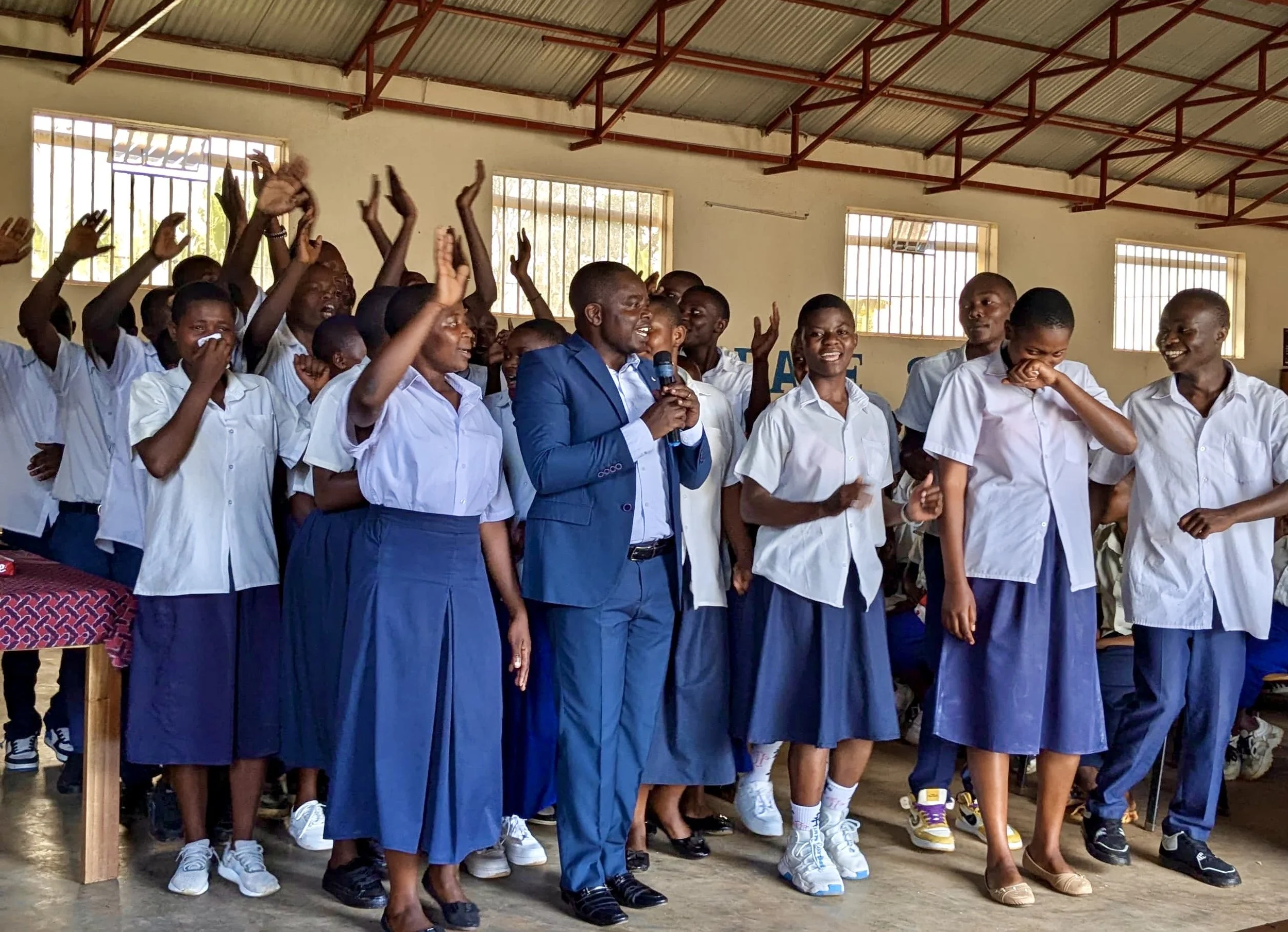
We celebrate this achievement with the whole Congo Peace School community and with YOU - our partners in educating the next generation of peace builders! After the Ebola update, read updates from some of the students in their own words.
EBOLA PREVENTION & EDUCATION UPDATE
Thanks to many of you donating to meet the need and an emergency grant from our Peace School preschool partner NEST Global, the school was able to procure prevention and protection equipment (PPE) shortly after the reports of the Ebola outbreak in eastern Congo. Before entering the campus, everyone has their temperature taken and wash their hands at the stations with chlorinated water.
Upon receiving the PPE supplies, the Peace School nurses have been disseminating key information on the Ebola virus, not only to those at the school, but to the surrounding communities through flyers and meetings. They teach how to prevent contracting and spreading the disease through regular hand washing and avoiding hunting animals / eating the meat. They educate about the mode of transmission, symptoms, and what to do immediately when symptoms are reported. While larger organizations are focusing on the epicenter, prevention remains a must in areas not seriously affected yet.

Why invest in prevention activities in school settings? Our Founding Director Amani Matabaro shares that schools are daily points of contact with larger populations, children, youth and families. Schools serve as awareness-raising locations to disseminate vital prevention messages. We are using the Congo Peace School to contribute to the fight against misinformation and to strengthen community trust.
The PPE at the school includes gloves, masks, gowns, face shields, hand sanitizer, soap, large containers of chlorinated water, disinfecting wipes, sprayers for cleaning classrooms and restrooms, bins for dispensary waste, flash thermometers for temperature checks, and printed communication materials that were distributed among school children and community members.
Messages were tailored for students, teachers, and parents to promote hygiene and vigilance. The Peace School is collaborating with the local health Center of Mumosho which is under supervision of the Health Zone. After meeting with the head nurse there and other stakeholders, we are meeting a pressing need to establish a new water source to supply the community of Mumosho. We continue to supply chlorinated water and education to the community, as no new cases have been found in South Kivu - the current effort is towards prevention of spread through education, clean water, and these practices.
Thoughts on Resilience
Speaking to Amani on a call the other day, one of the members of the Dillon Henry Foundation, our Peace School Founding Partner, hearing of how at peace the students and staff feel while at the school, noted how the school could be called the Congo Resilience School.
We watch from a distance as the students, staff, and the surrounding community move through and survive such horrors as the war, mass killings, and rape used as a weapon of war. We know how their nervous systems on high alert, in constant vigilance against violent attacks as well as trying to survive the economic fallout of the war and fear over how to procure their next meal for them, or for a child.
Amani shared that the word suicide used to sound foreign to the locals in eastern Congo, a western term that they didn’t understand. Horrifyingly, over the last few months with the war exacerbating the already extreme poverty, suicide is on the rise. At one period three deaths by suicide were reported per day for one month in South Kivu. One can only imagine the desperation of a parent unable to feed their children.
It is in that world that your partnership with the Congo Peace School provides the ground for people to find they are resilient, that they have the means to care for each other. The students eat two meals a day, often the only food they will get. The students and staff enter the school campus, Amani says, and they feel at peace. They can play – on the playground, on the soccer field, on the basketball court. They can find a quiet part of the library and disappear into a book. They can go to the computer lab and write an email to a pen pal in Brooklyn.
It is not hyperbole to say that your financial partnership is saving lives, and providing a place of peace so that people can not only survive, they can thrive and plan for a better future. Your emotional partnership – turning your attention to Congo, telling others about the what is happening there, ringing the alarm that the war and violence is unacceptable, reminding others that we are all connected, and thus if one or many are suffering, we are all suffering – is changing lives.
STUDENT STORIES
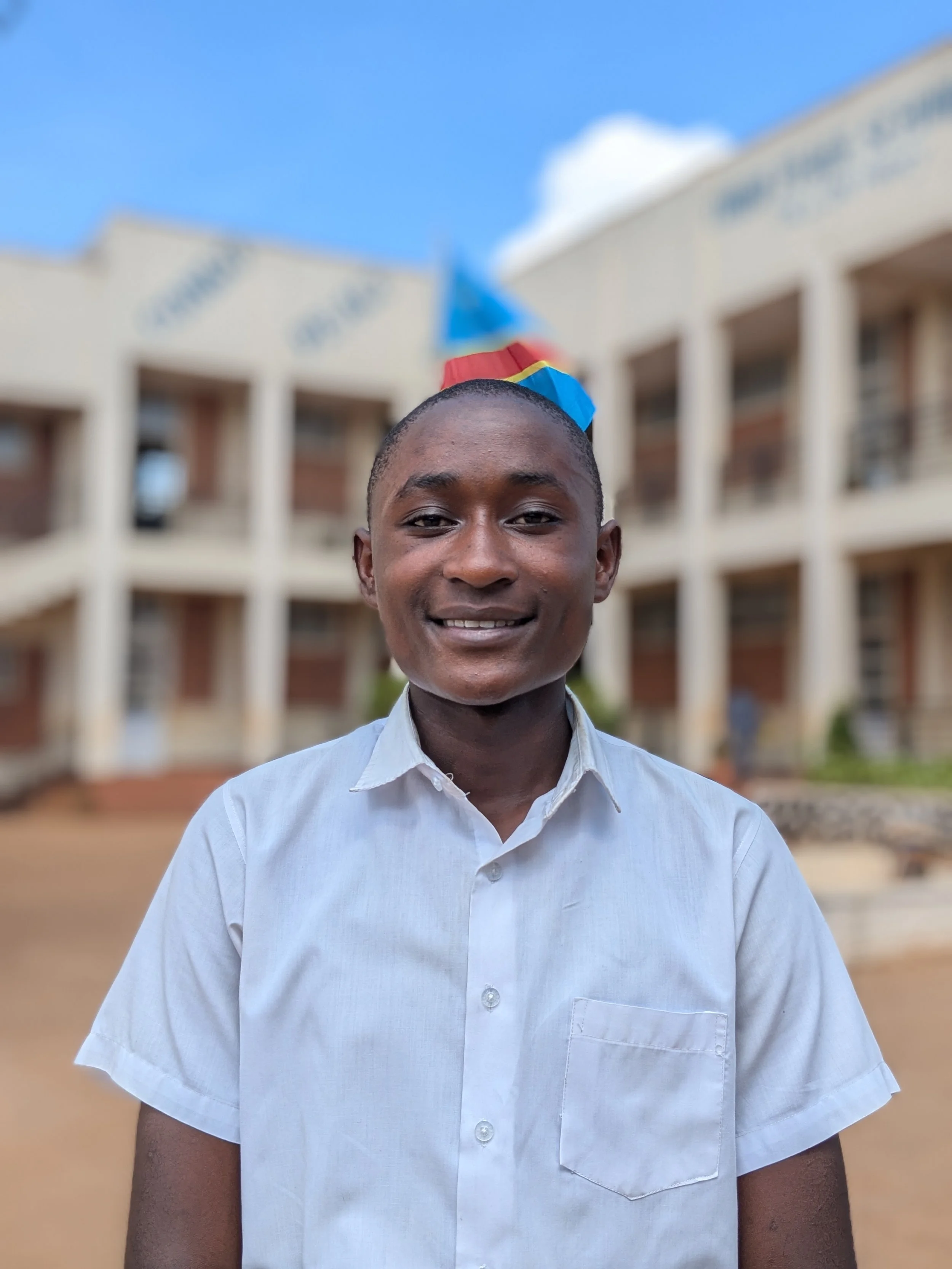
MATENDO CIZA STEPHANO
Interviewed before the national exams, now a Congo Peace School graduate, Class of 2026!
“I am a senior in the 6th grade of the humanities program at the Congo Peace School. The highlights of my school year were the classroom lessons, computer lab sessions, and ongoing assessments, as they prepared us for the upcoming first- and second-semester exams. In addition to that, other memories that left a strong impression on me were from the computer lab, since computer skills are becoming essential in today’s workforce.
Over the course of this school year, what has changed in me as a senior is that I’ve started studying in groups and even on my own without being forced to catch up in the subject, to ensure success on the state exams. My way of thinking and feeling about certain things has also changed, because I already know how to behave in social situations; once I’m in college and in the workplace, I won’t have many problems.
The lesson on nonviolence and peace that left the deepest impression on me this school year is “Dialogue,” because it allows two or more people to engage in verbal exchange to peacefully resolve various problems. It remains important to me because dialogue with others helps us identify the problem and seek solutions together; it allows students to come together and discuss any topic to find a peaceful and lasting solution.”
*We previously featured Matendo in 2023 on smiling as an act of nonviolence. It’s so wonderful to watch how these students are growing up in the security of the Congo Peace School’s campus, learning how to heal from trauma and share those practices and experience with their friends, families, and eventually new communities. The ripple effect of educating peace builders will be felt and seen in Congo.
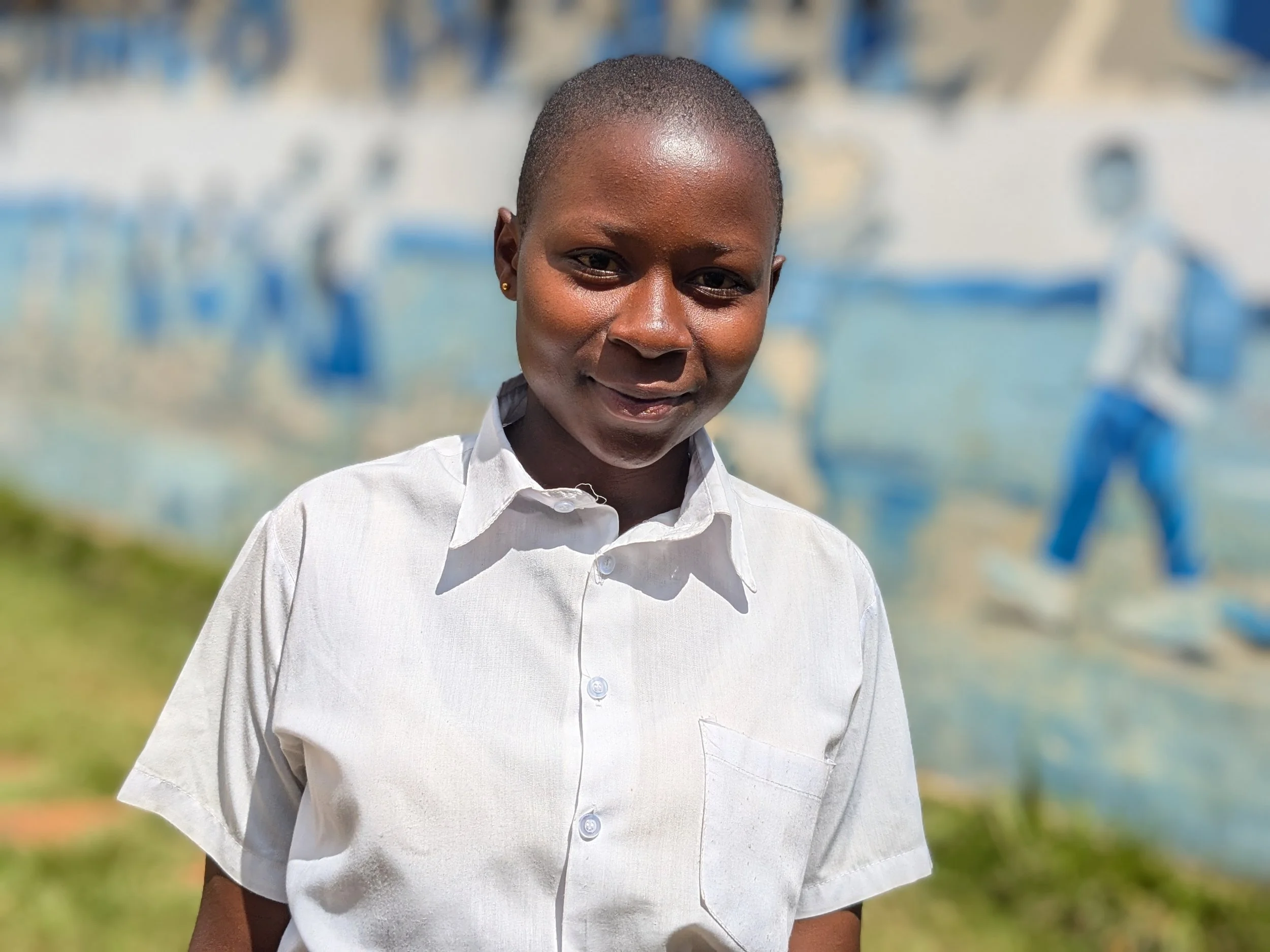
IRAGI MWAKA ALICE, 19
Now a Congo Peace School graduate, Class of 2026!
The highlights [from the year] for me are mainly during computer science classes, community development sessions, lab work, and when we resolve problems or conflicts between students at school.
What has changed is my approach to studying; I now attend school regularly, and I can resolve certain problems because I have confidence in myself. Before, I used to say I would go to a convent, but given the realities of life, I’ve decided to go to college if I can afford it.
What excited me was being able to wear regular clothes—no longer forced to wear the blue-and-white uniform—and also that I’ll be called a student rather than a pupil. I’ll now use carbon copy paper for my notes instead of notebooks, and I’ll be in charge of managing my own time.
The lesson that made the biggest impression on me was “gratitude.” It was the most important because it speaks to acknowledging the good received. Many students aren’t grateful; they’re characterized by ingratitude. Even if we do something good for them, it’s very difficult for them to say thank you or acknowledge the sacrifice made by the person who helped them.”
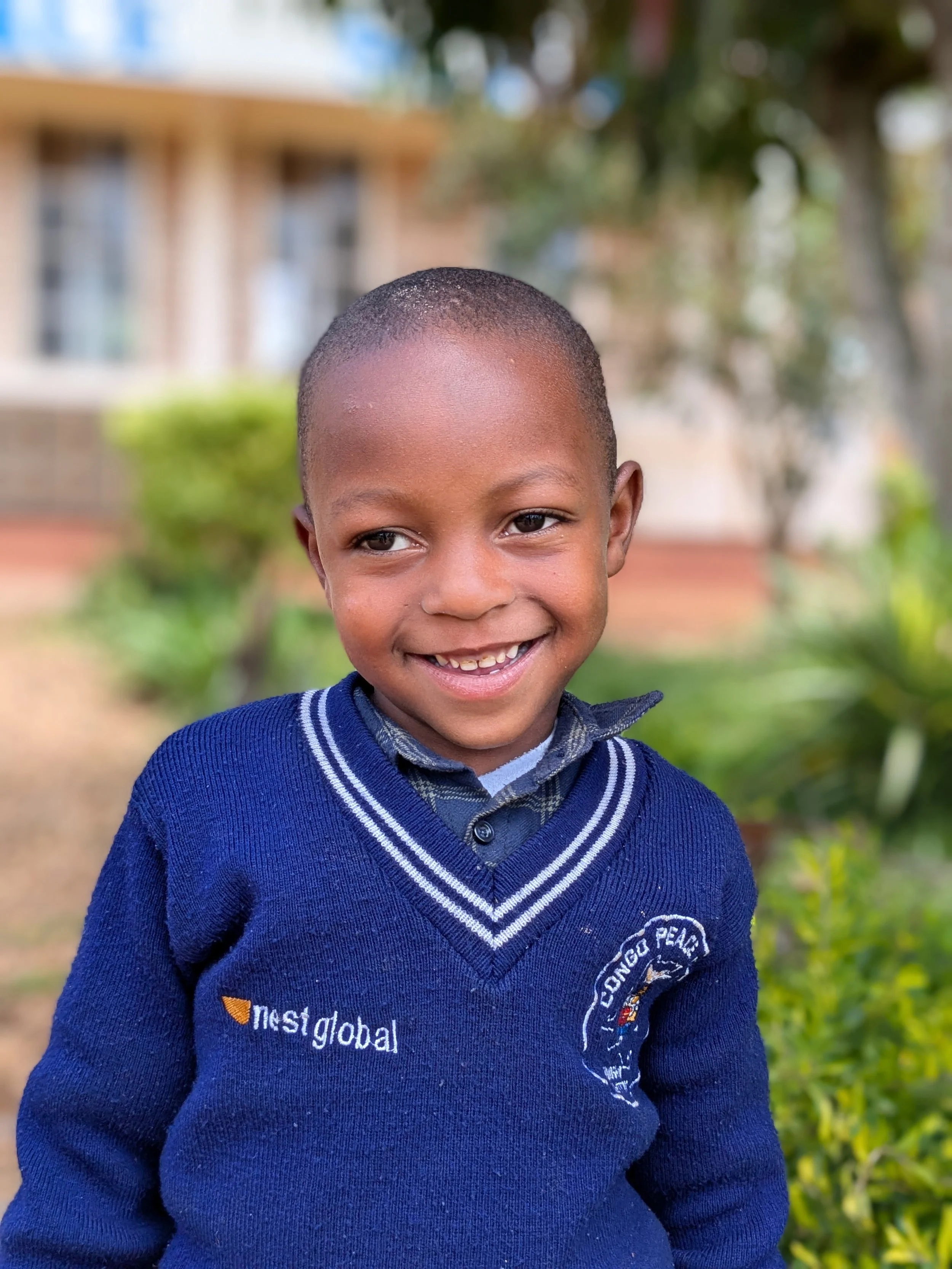
KAMERHE MIGABO GEORGES, 5-year-old boy who graduated preschool (Nest Congo), and is going to begin grade 1 primary in the fall.
“What I’ve really enjoyed this school year is the success I’m going to achieve.
The way I think has changed over this school year. I already know which days we have to be at school, which day is our day off, and which day we have to go to church.
What makes me happy about going to elementary school is the fact that I’m growing up, and it’s a big transition in my life. In elementary school, I’ll start wearing a uniform and good shoes. The difference between preschool and elementary school will be the lessons and the daily homework.
The concept of peace and nonviolence that I learned this year is the spirit of honesty that keeps us from lying.”
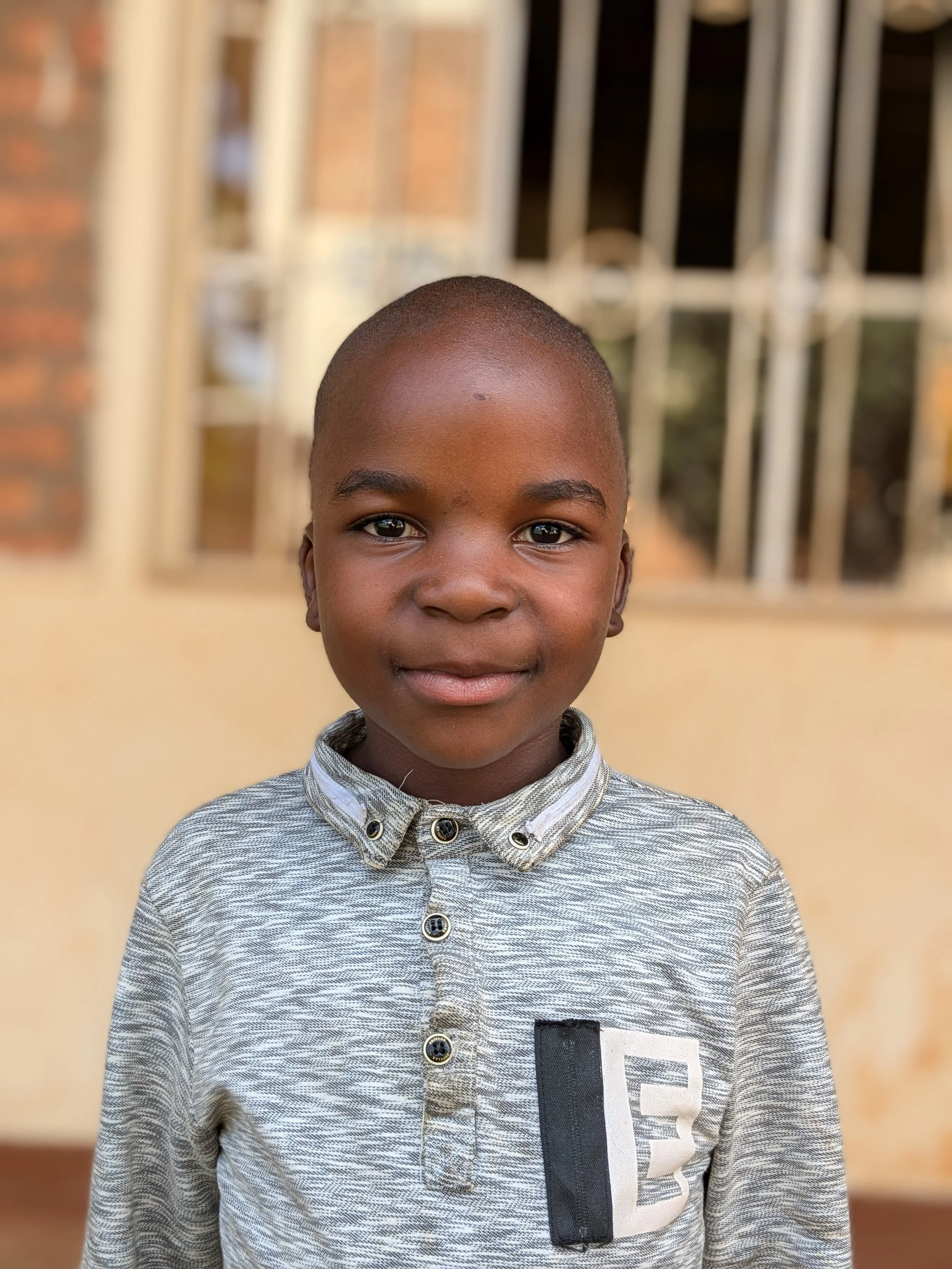
ALIBARIKI MADASHI 5-year-old girl. who graduated preschool (Nest Congo), and is going to begin grade 1 primary in the fall.
“The way I interact with others has changed for the better—even the way I think has changed. This year, I’ve felt a lot of empathy for people who are going through a hard time.
What really excited me about going to elementary school is the teaching style and the homework. The activity on peace and nonviolence that made the biggest impression on me was the one where we learned to love our neighbors.”
CAMPUS TOUR
As we cannot take you to eastern Congo at this time, please enjoy a campus tour to get a sense of the serenity, scope, and peace the Congo Peace School provides to the students, staff, and community. Video here. Volume up to hear the rooster crow and birdsong.
Thank you for your persistence in supporting the mission for a more peaceful, just future for us all – knowing that transforming trauma and providing education rooted in peace and nonviolence can change the course of history. Please share with others to invite them to join the movement to equip students to be the next generation of peace builders!